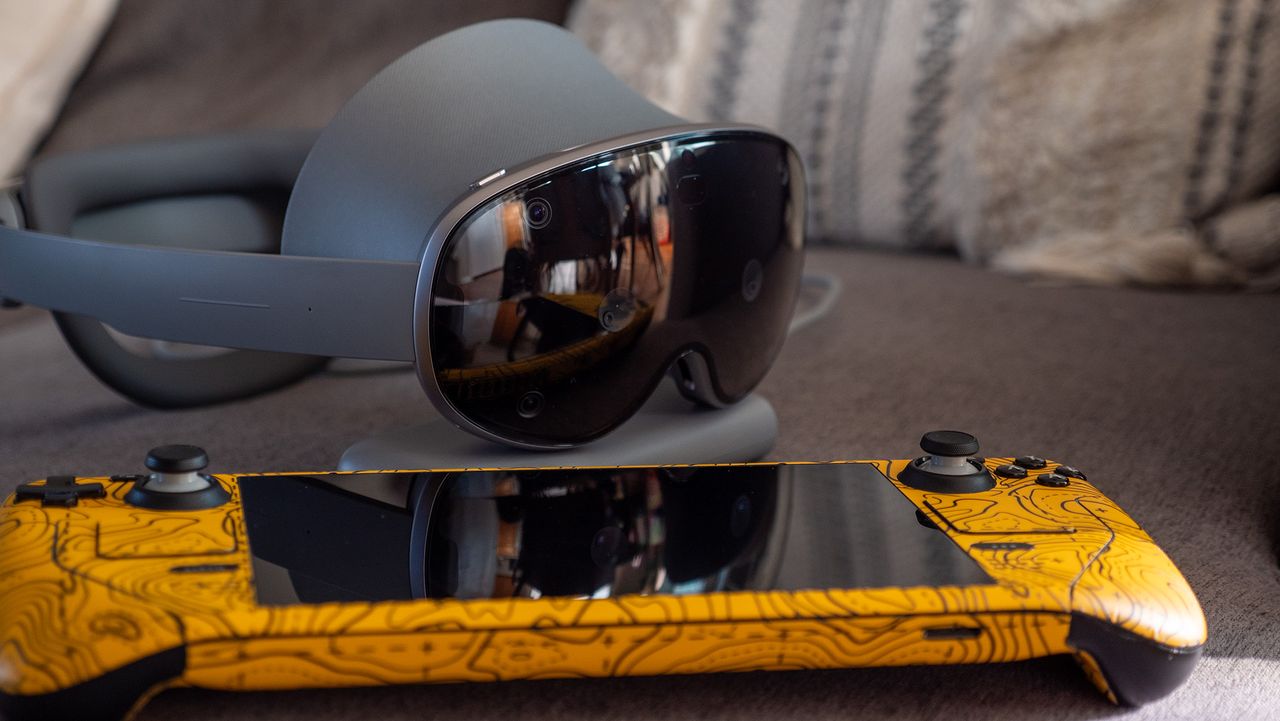
Two of the best Steam Frame features are available for the Galaxy XR right now, and I’m loving what they’re doing for my gaming performance

The Galaxy XR has become my go-to device for multitasking. While the headset seems to be marketed more toward entertainment like watching immersive MLB or NBA games, the Olympics, and more, I’ve found that I keep coming back to it to run my favorite Android apps and experiences in a larger, more comfortable way than my phone or tablets can provide.

But what if you want to go bigger than this? Streaming a desktop PC to the Galaxy XR can be done in a number of ways, but the two “official” ways of doing it are quite restrictive. Samsung’s official app requires a GalaxyBook laptop — I don’t know anyone who owns one of those — and the official Android XR PC Connect app is a surprisingly slow, laggy experience.

That means the only good option is the famed third-party streaming app, Virtual Desktop. This one’s been around since 2016 and has evolved as wireless headsets became more commonplace. It can be used for simple “2D streaming” of your desktop and standard games or apps, but it really shines when you boot up a PC VR game through SteamVR, especially with an impressive new feature that’s perfect for the Galaxy XR’s hardware.

How is Steam Frame streaming different?
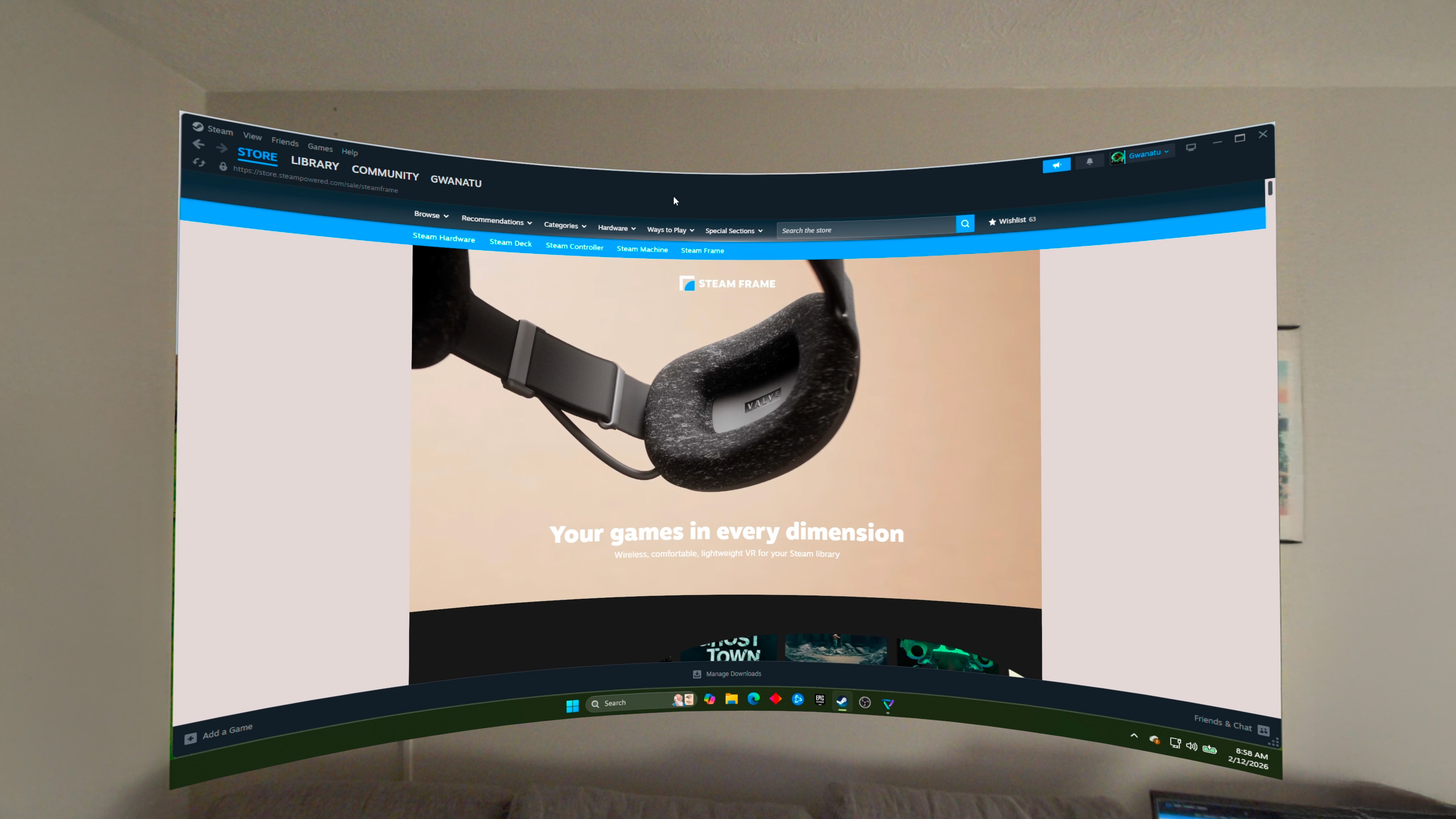
Valve’s Steam Frame is basically a Steam Deck that you can wear. And while that’s certainly a cool enough proposition by itself, Valve is still uniquely prioritizing PC VR games. Instead of piggybacking off your home’s wireless network, Valve includes a USB stick that creates a specialized wireless network just for the headset. That not only helps avoid traffic jams that cause streaming quality degradation, but it also enables foveated streaming.

If you’re like most people, you’ve likely never heard of that last term, but it’s one you’ll quickly want to become familiar with because of what it can do. Foveated streaming works in tandem with the eye-tracking capabilities of the Steam Frame and keeps the highest-quality streaming right in the center of your vision, while everything else remains lower quality (since your peripheral vision can’t see it clearly, anyway) to save bandwidth.

While we thought Valve might be the first company to launch a headset with this capability, it turns out that Guy Godin, the legendary developer behind Virtual Desktop, just launched a huge update for his app that upgrades your existing headset with Steam Frame-like streaming.

Turning the Galaxy XR into a Steam Frame

Virtual Desktop

The Virtual Desktop app is a one-time $24.99 purchase that lets you stream your PC to your favorite VR headset with more bells and whistles than any comparable software provides. It supports 2D desktops, 3D movies, and even full wireless VR connectivity. Ditch the wire and go wireless, and even get the ultimate in wireless quality with the upcoming foveated rendering update!

Get it on Google Play | Meta Horizon store

If you own a Samsung Galaxy XR, Meta Quest Pro, or another headset with eye tracking capabilities, Virtual Desktop is about to become the best utility you can buy for your headset. I got to try a beta release of the new feature on my Galaxy XR this week and was blown away by the clarity it offers. The update is now available to all Virtual Desktop users as of version 1.34.16.

Surprisingly, it’s not just the quality of the visuals that gets improved with foveated streaming. Even though the center of vision is streaming in higher quality than you’ve likely ever seen from your headset, the entire stream is using less overall bandwidth than the standard streaming quality. That means your PC VR games being streamed from Steam or another platform will run more smoothly, look sharper, and will even be less taxing for your home network.
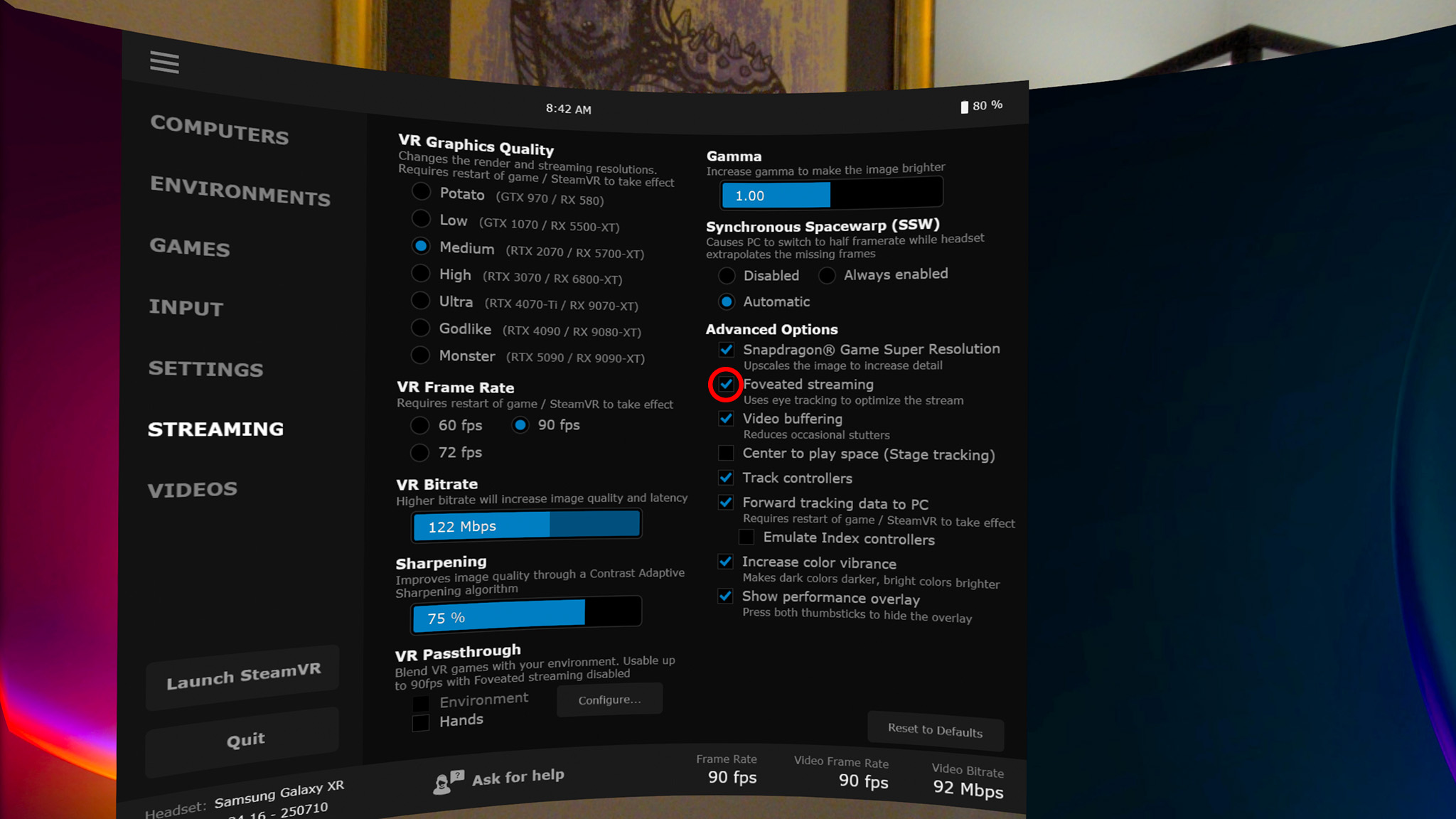
To activate it, start a Virtual Desktop session with your PC, then click the menu button on the left controller, or perform a pinch gesture with your left hand to open the Virtual Desktop menu. Click the Streaming menu on the left, then select the checkbox next to Foveated Streaming.

Everything from here on is handled automatically, though you can tweak the bitrate and graphical quality in the app if you want to control settings more granularly. This will work on any headset with eye tracking across all platforms Virtual Desktop is available on, which is excellent news for everyone’s VR headset of choice.

Now for better wireless streaming
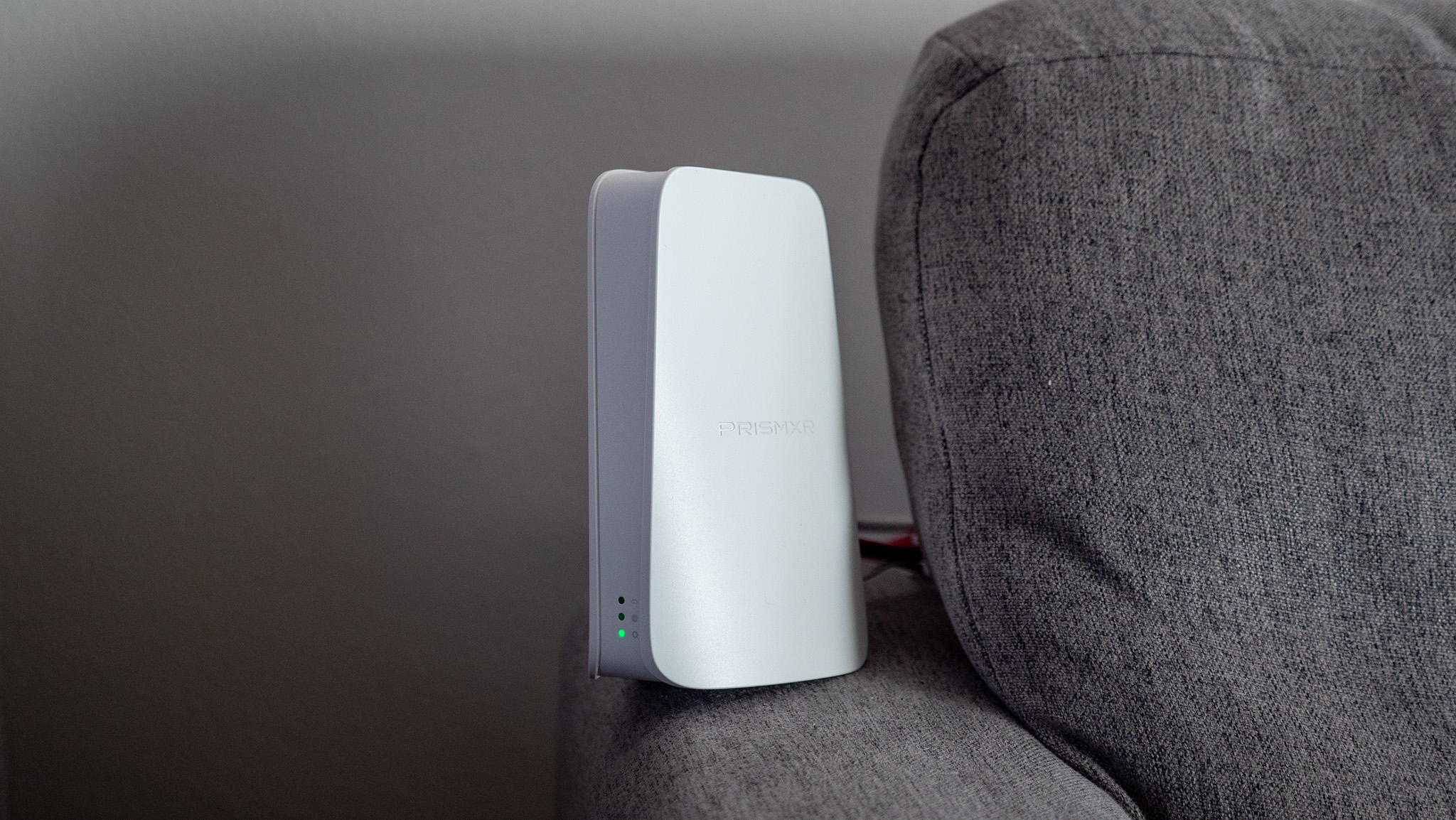
If you live in a community building, like an apartment complex or a condo, or if you just have a million devices hogging bandwidth on your home network, you might find that wireless streaming quality leaves a lot to be desired. This is where a specialized wireless router can come in handy to create a low-latency network between your PC and VR headset.

You could buy a Steam Frame when it eventually comes out and use the wireless adapter, but I’ve got a better solution that you can get right now, and it’s less than 1/10th the assumed price of the Steam Frame: the PrismXR Puppis S1.

The company sells two versions. An entry-level model, the Puppis S1 Lite, provides an AX1500 Wi-Fi 6 connection for $50, and an upgraded model that provides an AX3000 Wi-Fi 6 connection for $80. The cheaper model requires a wired Ethernet connection to your PC, while the more expensive model offers a USB connection and additional wireless capability.

I used the original model a few years back and generally wasn’t impressed with the package, which I thought required too much tinkering for my liking, but the company’s upgraded software and newer hardware models are a completely different experience.

The Puppis S1 and S1 Lite both work with any VR headset you might own, so it’s just as great for Meta Quest 3 owners as it is for folks owning a Galaxy XR.

The S1 Lite is the simplest experience and the one I’ll focus on today. You plug the included power adapter into it, connect one ethernet cable from it to your router, then plug the other ethernet cable into your PC. Any configuration you need to run is done via the PrismXR PC app, and it lets you set a wireless network name, password, tweak several other options, and scan for the best wireless signal available.

That last part is paramount to ensuring the unit performs at its best, especially if you live in a community building with a ton of different Wi-Fi networks. A one-tap scan utility will take about 60 seconds to check dozens of different performance parameters and make suggestions to improve any problems you may have. My initial scan found about a half dozen issues, all of which were one-click fixes. It’s extraordinarily low effort to set up, something I’m not accustomed to with PC VR gaming.
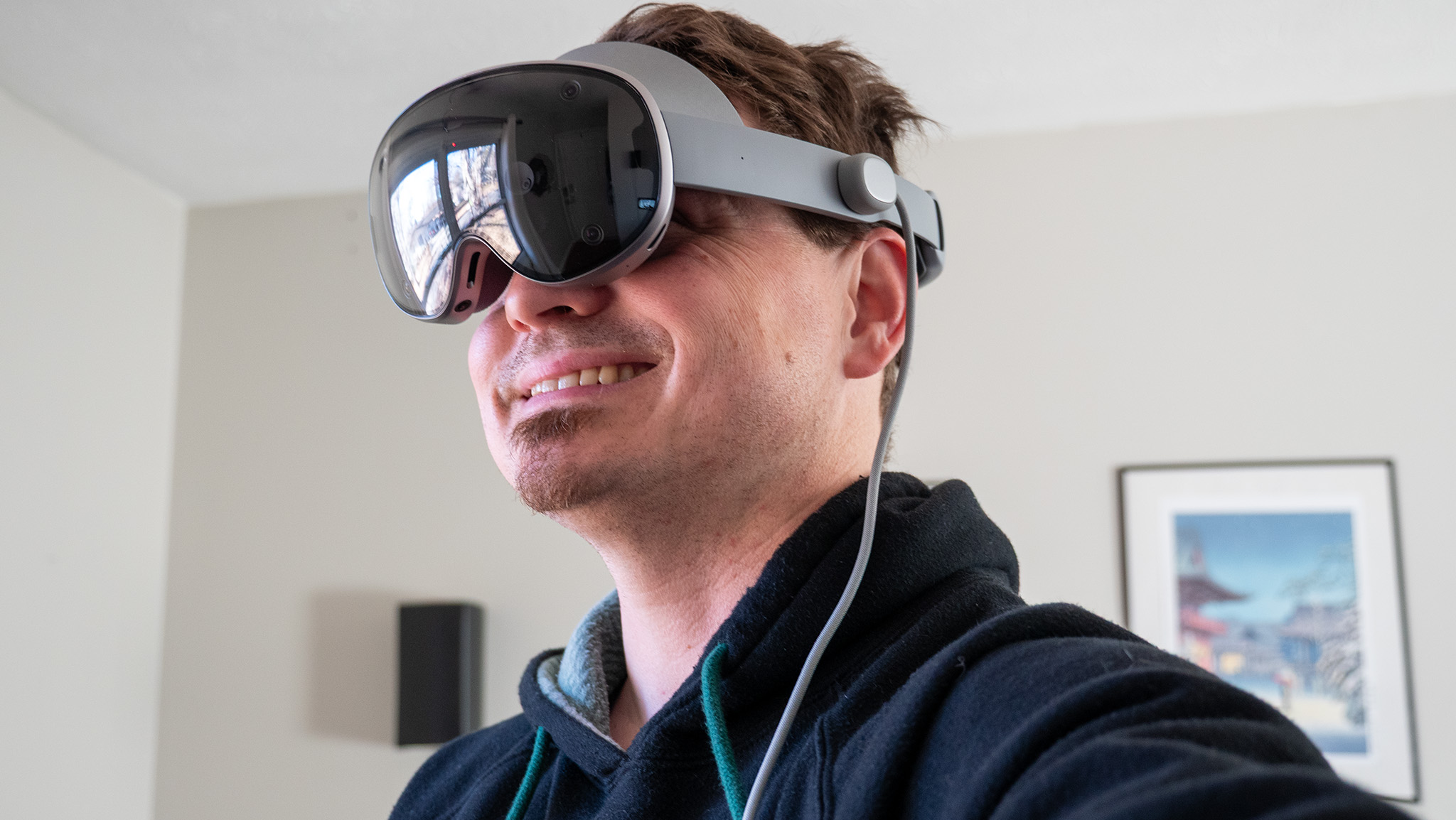
From here, you’ll connect your headset to the hotspot the Puppis S1 makes, then launch Virtual Desktop (or your other favorite streaming app) to connect to your PC. I noticed an immediate improvement in wireless latency and performance compared to my home router, and this is the exact same experience I expect to see from the Steam Frame’s included wireless dongle.

Undoubtedly, Valve’s Steam Frame will be the easiest way to get all this done for someone who may not have a VR headset with eye tracking, but the rest of us who are already loving our headsets can get a quick upgrade without having to wait for the RAM crisis to end so Valve can finally release the Frame.

Like this article? For more stories like this, follow us on MSN by clicking the +Follow button at the top of this page.

AMD denies report of MI455X delays as Nvidia VR200 systems are rumored to arrive early — company says Helios systems ‘on target for 2H 2026’

AMD’s next-generation Instinct MI455X may face delays in production and adoption by end-users, according to a report by SemiAnalysis, a claim that AMD was quick to deny.

By contrast, Nvidia’s Vera Rubin platform for AI data centers may show up on the market earlier than anticipated (according to Evercore, via @halfblindmonkey) as silicon is already in mass production. The company must finalize its AI server and NVL72 VR200 rack-scale solution design and qualify it with customers soon to start volume shipments in order to meet its aggressive claims of platform readiness at CES this year.

“Engineering samples and low volume production of AMD’s first rack scale MI455X UALoE72 system will be in H2 2026 while due to manufacturing delays, the mass production ramp and first production tokens will only be generated on an MI455X UALoE72 by Q2 2027,” the report by SemiAnalysis reads.

“Well, your assessment is still wrong,” wrote Anush Elangovan, corporate vice president of AMD’s software development, in an X post. “On target for 2H 2026.”

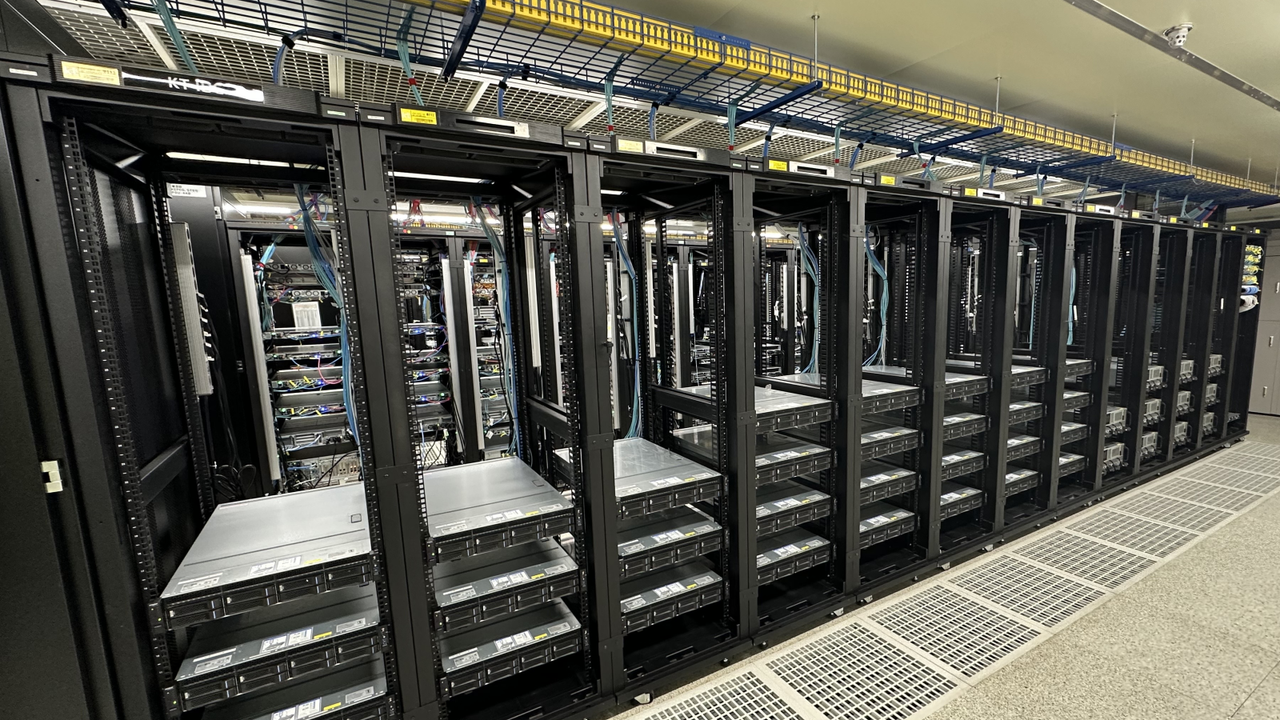
AMD’s Helios rack-scale solutions for AI pack 72 Instinct MI455X AI accelerators with 31 TB of HBM4 memory that are designed to deliver 2.9 FP4 exaFLOPS for AI inference and 1.4 FP8 exaFLOPS for AI training. Initially, it was expected that AMD’s first rack-scale AI system will use UALink interconnections for scale-up connectivity to maximize performance. However, it looks like at least initial Helios machines will not use UALink, but UALink over Ethernet, which means lower performance.

We do not know whether UALink is to blame for the reported delay, but Astera Labs, a leading developer of connectivity solutions, recently confirmed that UALink-based platforms would ramp in 2027, not in 2026.

 ”Solid traction continues to develop with respect to UALink with a vibrant ecosystem, including product announcements, broad IP availability, and compliance methodologies being finalized,” said Jitendra Mohan, chief executive of Astera Labs, during the company’s conference call with financial analysts and investors. “Recent public roadmap announcements from AWS and AMD along with other ongoing engagements indicate a broad adoption. UALink remains the highest performance and lowest latency fully open solution for AI scale up connectivity, and we will be ready to intercept the initial customer platform ramps in 2027.”

Meanwhile, if Evercore ISI analyst Mark Lipacis is to be believed, Nvidia may be on-track to release its NVL72 VR200 platform as early as in Q2 2026, three to six months ahead of the schedule. Keeping in mind that Jensen Huang said that the Vera Rubin platform was in production as of early January, it is well possible that some of Nvidia’s closest customers can get the new AI platform earlier than expected.

“Some believe that China ban has enabled Nvidia to leverage suppliers that have typically served China to work on worldwide product development, enabling Rubin to be 3 – 6 months ahead of schedule,” an Evercore note for clients reads. “Some would not be surprised if Rubin shipments happen by end of Q2 2026. Hyperscalers note that Vera CPU, Rubin GPU [are] already in fabrication and running test/validation.”

If Nvidia manages to speed up the arrival of NVL72 VR200 platform, whereas AMD delays volume ramp of its Helios rack-scale solution, then the former will strengthen its leadership on the AI market for the next year as developers of frontier AI models will continue to rely on Nvidia’s hardware.

Follow Tom’s Hardware on Google News, or add us as a preferred source, to get our latest news, analysis, & reviews in your feeds.

Like this article? For more stories like this, follow us on MSN by clicking the +Follow button at the top of this page.

One-third of Britons fume when people put calls on loud in public but majority won’t tell them off

One-third of Britons fume when other people put their phone calls on loudspeaker in public but the vast majority won’t tell them off, according to new research.

Samsung Electronics quizzed the nation to find out what really grinds Britons’ gears, revealing that everyday irritations can quickly bubble over.

The survey found that four in 10 Brits admit it can take just one small thing to push them over the edge.

Specifically, commuters who listen to music or videos out loud in public ranked highly among the biggest annoyances (33 per cent).

Loudspeaker phone calls also featured prominently, with many saying the behaviour feels inconsiderate in shared spaces.

These findings echo wider concerns highlighted by the BBC, which reported in August 2025 that Transport for London (TfL) is actively targeting “disruptive behaviour” from passengers who play music or take calls on loudspeaker.

TfL said most bus and Tube users consider the behaviour a nuisance, with some finding the extra noise stressful or overwhelming.

Research conducted by TfL found 70 per cent of passengers surveyed said films, music and calls played out loud were a nuisance, which prompted a poster campaign urging travellers to use headphones or hands-free kits.

The posters first appeared on the Elizabeth line, followed by a wider rollout across the network.

BBC reporting also highlighted how the issue affects staff, with bus drivers and rail workers describing loud phone use as distracting and disruptive.

In one case, a driver asked a passenger to turn down a video, only to be insulted before the person stormed off the bus.

Passengers told the BBC they often feel too uncomfortable to intervene themselves, instead choosing to move seats, get off early or simply endure the noise.

While enforcement powers do exist, including the ability to remove or fine passengers, they are rarely used.

This sentiment is backed by the Samsung Electronics research, with 70 per cent saying they’re aware they’re nearing boiling point, they just cannot always address the issue with the source of the annoyance.

The research also suggests frustration is often kept quiet, with over half (59 per cent) believing people are nervous to admit when they’ve been pushed to breaking point, particularly when the trigger feels small or trivial.

However, once Britons hit boiling point, it lingers for some.

Almost two-fifths (38 per cent) admit it takes at least 10 minutes to cool down, while fewer than one in ten say it can ruin most of their day.

For a smaller but significant group, frustration doesn’t pass quickly at all, lingering for hours or longer.

Half the population say tiredness has a major impact on how easily they get irritated, making small issues feel far bigger than they should.

Despite the long list of shared gripes, frustration isn’t always expressed openly.

Many Brits admit they are more likely to stew internally than confront someone, particularly when the annoyance comes from strangers.

More than half of Brits (51 per cent) agree it bothers them less when friends do irritating things than when strangers do, while only a small minority (10 per cent) say they would actually challenge someone they don’t know.

When ranking themselves against peers, 32 per cent admit they feel they have a lower annoyance threshold than others.

Together, the findings suggest a nation united in quiet irritation, deeply annoyed by noisy behaviour, yet reluctant to speak up, as loudspeaker culture becomes an increasingly common feature of public life.

Our Standards: The GB News Editorial Charter

Palantir moves headquarters to Miami amid tech’s growing retreat to Florida

Palantir announced on Tuesday that it has moved its headquarters to Miami from Denver. The data analytics company, criticized for its role in the Trump administration’s immigration crackdown, joins a host of other businesses and billionaires that recently moved to Florida in search of a more business-friendly climate.

Palantir’s move across state lines comes after its chair, Peter Thiel, announced on 31 December that he opened a Miami office for his private investment firm. Thiel already has a mansion in Miami Beach. The company, previously headquartered in Palo Alto, announced the move on X but did not provide further details or respond to a request for comment. Palantir’s stay in Colorado lasted about six years; the company exited California in August 2020 – with its CEO, Alex Karp, citing disagreements with the state’s values.

Palantir’s Denver office has frequently been the site of protest, as the company faces heated criticism for its involvement in the Trump administration’s push to deport immigrants. Tools and platforms built by Palantir have been used by the federal government in efforts to surveil and detain immigrants. The company has also inked a major contract with the UK’s National Health Service.

Colorado’s immigration and tech activists view Palantir’s departure as a result of their sustained organizing. Juan Sebastian Pinto, a former Palantir employee and organizer for AI regulation in Denver, said that a coalition of unions and grassroots organizations, including Denver Anti-War Action, held a few dozen town halls, strikes and protests that mounted pressure on Palantir’s presence in the city. Pinto also said that Palantir may have been dissuaded by Colorado’s state lawmakers taking the lead on AI regulation with proposals to limit surveillance and discrimination.

“Colorado has rejected the values of Palantir – the values of an economy built on exploitation of people’s data, whether it’s for warfare or for immigration enforcement,” Pinto said.

Many of California’s wealthiest billionaires seem to be considering a move to Florida – spooked by the state’s consideration of a billionaire tax. There has also been a concerted effort by the business leaders Ken Griffin and Stephen Ross to convince billionaires to move to south Florida and to bring their businesses with them.

Palantir has tried to distance itself from Trump’s immigration apparatus, but that has not quelled protest. Some of the company’s employees appear to be disturbed, too. Karp recorded a video about Palantir’s involvement with ICE for staff and said they could sign NDAs if they wanted more details, according to Wired.

James Fishback, a Republican candidate for Florida governor, wrote on X in response to Palantir’s move, saying he would ban Palantir from all government contracts if elected. “You are a threat to our civil liberties,” Fishback wrote. He had voiced the same position last month. Fishback’s commitment comes amid increasing pressure on lawmakers to evaluate their relationship with Palantir. The nationwide campaign Purge Palantir has been documenting politicians who received funds from the company’s executives and pressuring them not to accept their donations. The campaign has had some success so far. The Colorado Sun reported that the Colorado representative Jason Crow and Colorado senator John Hickenlooper planned to donate more than $50,000 each, in campaign contributions from Palantir, to immigrant rights groups.

Palantir blew past Wall Street expectations for the fourth quarter of 2025 and reported 66% year-over-year growth in revenue from government contracts, to $570m. Its stock, however, has sunk 20% since the start of 2026.

Tesla Model 3 Performance review – 0–60 in 2.9 seconds but is it the one to buy?

A brutally quick electric saloon that blends outrageous acceleration with everyday usability, though it won’t suit every buyer looking for pure driving drama

This is what happens when Tesla takes its new Model 3 and turns the power up a notch. Or several notches, in fact.

It’s the range-topper in terms of price, at £59,990 and it has some pretty eye-watering specs. There’s around 500bhp, 0-60 arrives in a frankly rather frightening 2.9 seconds, and there are plenty of tweaks to the suspension and brakes.

There are a few visual tweaks, too, but they’re less noticeable, and the big news with this car, is obviously, its power and drivability.

Because, let’s make no bones about it, it’s an EV. And it is, of course, pretty heavy.

That, however, doesn’t add up to the wallowy and unwieldy drive you might expect. It’s actually surprisingly lithe and responsive.

The seats in the Performance version are more sporty, so they hug you as you dive into the corners, and the stiffer suspension does a brilliant job of tidying up its road manners and inspiring confidence.

Handily, though, it’s also a delight to drive at a normal pace. Much has been said about the minimalism of Tesla’s interiors and I won’t labour the point, but if manufacturers really are going to insist on piling all the functionality into a main screen, I wish they’d do it as well as Tesla. It’s still the wrong way to go about things, but Tesla does make it as simple as possible.

There are a few foibles to speak of. The auto wipers are a bit clumsy, the indicators take some getting used to, and the adaptive cruise control can be a bit jittery at times.

But as a long-journey mile-muncher, it’s just so effortless. The enormity of power it has on tap makes overtakes a doddle, visibility is great, the ride is lovely, and the stereo is top-notch.

Range is compromised over some of its stablemates, with the official WLTP rating of 354 miles over the range-hero’s Long Range RWD’s 466 miles, but that’s the price you pay for having a supercar slayer that can also do a great job of lugging a family around in quiet comfort.

And it makes me think that there might be a bit of a narrow market for the Model 3 Performance. If you wanted something seriously fast, you might also want something that’s a thrill to drive, rather than just a competent corner-taker. So you might buy a Porsche Cayman, or a Lotus.

And if you wanted a family saloon car, you’d probably be more interested in saving £10,000 or more and opting for the Long Range versions, which certainly don’t embarrass themselves in a straight line, but can do at least 100 miles more per charge.

At the end of the day, the Performance’s surge from 0-60 is little more than a party piece. It’s something you’ll never tire of, but it comes at the cost of range and a little bit of ride comfort.

But then the inner hooligan in me takes back control of the purse strings, and reminds me just what a jack-of-all-trades this car really is.

It can power past Porsches in a straight line, it can get you from A-to-B in complete comfort, and it can lug your family from country to country, with all their belongings in tow, safely and serenely.

As an all-rounder, then, it’s brilliant. And something of a performance car bargain if you start to look at how much you’d have to spend to go quite so quickly in a petrol-powered car.

It might not suit everyone, but if you’re the sort that struggles to decide whether the heart or the head should win over, this might just be for you.