India AI summit descends into chaos amid long queues and Modi lockdown

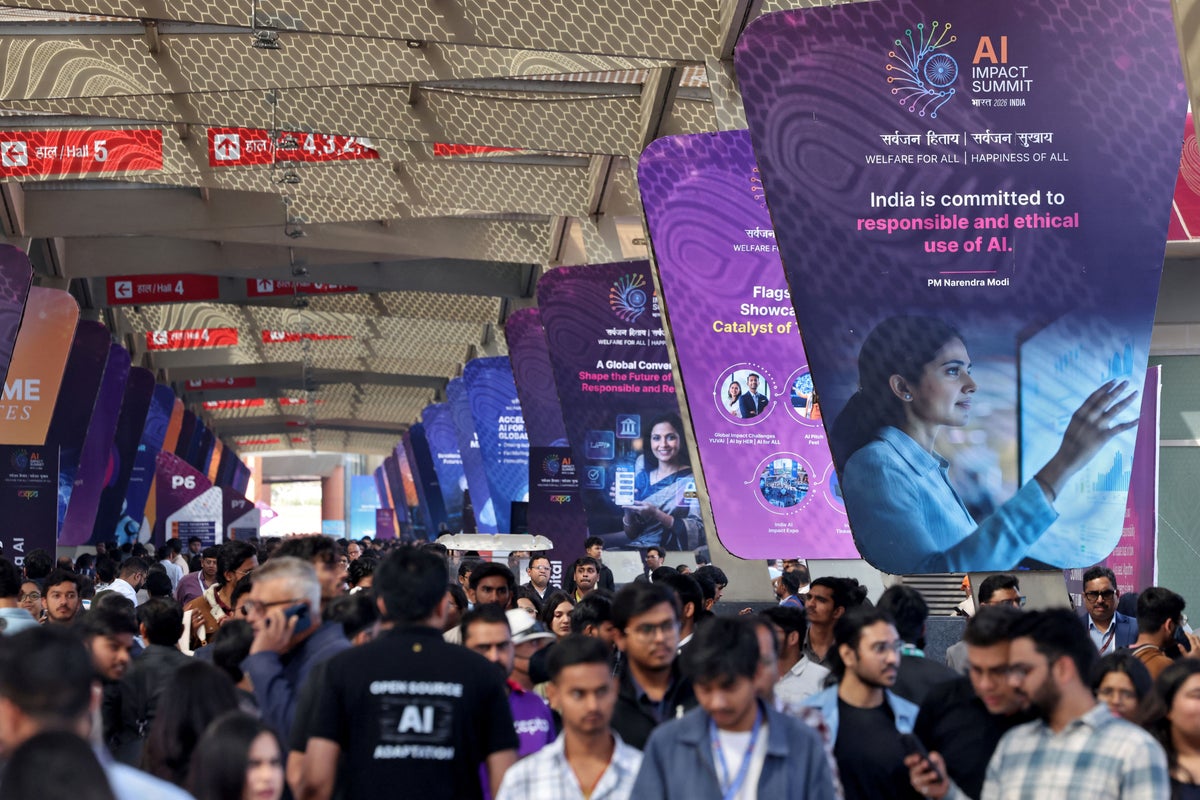
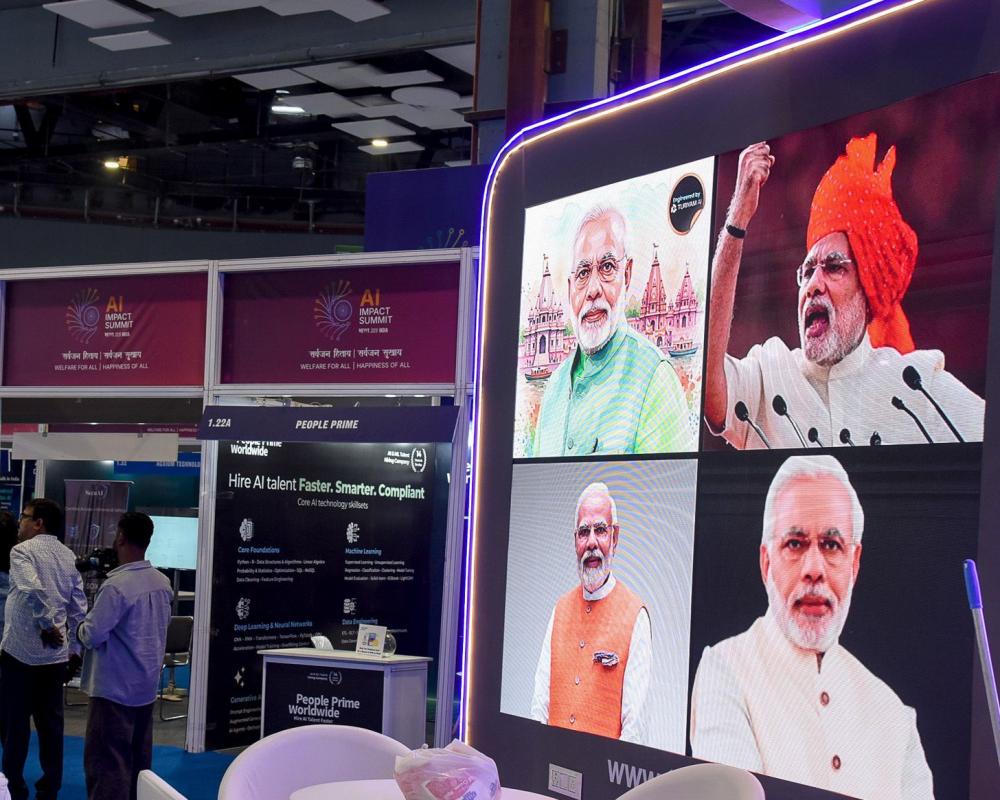
India’s flagship artificial intelligence summit was overshadowed by chaos on its opening day amid long queues in unseasonal heat, traffic congestions, and sudden security sweeps ahead of prime minister Narendra Modi’s visit.

Thousands of people on Monday attended the summit at the 123-acre Bharat Mandapam complex in the capital Delhi. Over 250,000 had registered their attendance over the week. High profile guests included French president Emmanuel Macron and tech giants Sam Altman and Sundar Pichai as India aims to position itself as a global AI hub.

But for many on the ground, the first day was defined less by grand geopolitical messaging and more by blocked gates, delayed panels, and uncertainty over access.

After allowing attendees inside the venue, including the main hall where the exhibitions were set up by companies showcasing their AI capabilities, the zone was evacuated in the afternoon for security checks ahead of Mr Modi’s visit, forcing exhibitors and founders to leave their stalls for several hours.

Founders posted online about being unable to retrieve their equipment which they later said were stolen after the sudden evacuation.

Dhananjay Yadav, co-founder and chief executive of AI wearable startup NeoSapien, wrote on X that security personnel arrived around noon and asked exhibitors to leave ahead of the prime minister’s visit.

“I asked: ‘Should we take our wearables?’ They said, others are leaving even laptops behind, security will take care,” he wrote.

“Later we found our wearables were stolen,” he said.

He added: “We paid for flights, accommodation, logistics and even the booth. Only to see our wearables disappear inside a high-security zone.”

Devesh Mahla, deputy commissioner of police, New Delhi district, told The Indian Express on Tuesday that they had not received any complaint in the matter so far.

Some exhibitors at the venue complained to organisers about unclear instructions and overlapping security directions, while some were unsure when access would be restored.

Delegates also described confusion over entry procedures and security checks, Reuters reported.

Sharing a photo of long queues outside the venue on X, Maitreya Wagh, founder of Bengaluru-based AI company Bolna, wrote: “Gates are closed so could not access my own booth at the AI Summit.

“If you’re also stuck outside and wanted to visit the @bolna_dev team, dm me. We may set up a mini-booth at some Connaught Place cafe,” he joked.

Several roads have been blocked and traffic was getting diverted in central Delhi ahead of the summit.

Organisers told Indian media on Tuesday that steps had been taken to ease congestion and improve coordination for the remaining days of the summit. By Tuesday morning, queues had eased slightly, though traffic diversions around central Delhi continued to affect arrival times for delegates and media.

“This is the biggest AI summit in the world. The response was phenomenal. The energy is palpable. We can see the organization is very smooth now. If anybody has faced any problems yesterday, we apologise for that,” India’s Information Technology minister Ashwini Vaishnaw said.

“Whatever feedback you have, please share with us. We are open-minded. We will make efforts to make the experience smoother and enjoyable for all of you. We have a war room which has been operating since yesterday. My entire team is working hard day and night for this summit,” he said.
The confusion extended into day two when Mr Gates’s name briefly disappeared from a list of speakers on the summit website, triggering speculation that he had been disinvited due to recent criticism over his association with Jeffrey Epstein.

One Indian media report cited government sources as saying Mr Gates was “not expected” to attend and that his invitation had been “reviewed”.

But a spokesperson for Mr Gates said the reports were not accurate, telling The Independent: “Bill Gates is attending the AI Impact Summit. He will be delivering his keynote as scheduled.”

Mr Gates’s invitation had earlier drawn criticism in India, with his visit attracting protests in the southern state of Andhra Pradesh by opposition political party members.

He arrived in India on Monday and met Andhra Pradesh chief minister N Chandrababu Naidu in Amaravati where he praised the state’s use of AI and technology in health, agriculture and education. He has been reviewing projects backed by the Gates Foundation, which is active in public health initiatives in the state.

The summit will continue till 20 February, with keynote addresses and high-level sessions scheduled on Thursday and Friday.

From news to politics, travel to sport, culture to climate – The Independent has a host of free newsletters to suit your interests. To find the stories you want to read, and more, in your inbox, click here.
Historic photos reanimated by AI spark huge response in Wirral seaside town

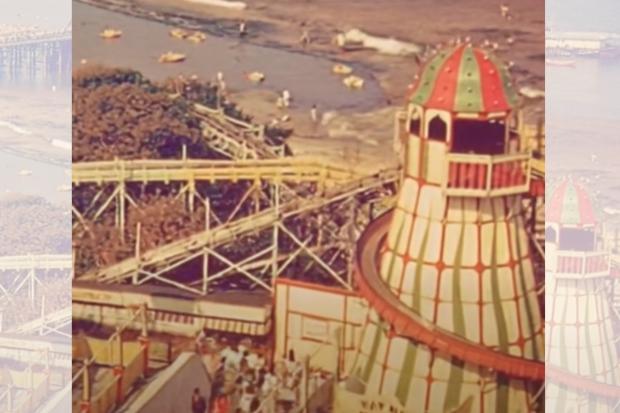
A SERIES of historic photographs of New Brighton dating from the Victorian era through to the 1970s and 80s has been digitally re-animated using generative AI that generated ‘significant organic engagement within 24 hours of publication’, according to those behind the project.

Developed by New Brighton Creative Futures, the work involved deep research into the town’s visual heritage — sourcing archival photographs, wartime imagery, Art Deco posters and mid-century seaside scenes — then restoring, colourising and carefully reanimating them into atmospheric moving sequences.

The public’s response to the project has been ‘immediate and substantial’, according to Rory Wilmer, creative director of New Brighton Creative Futures,

Among the historic photographs of New Brighton dating from the Victorian era through to the 1970s and 80s that have been digitally re-animated using generative AI (Image: Rory Wilmer / Open Air Gallery)

On Facebook alone, the videos are approaching 50,000 views, with more than 100 shares recorded within the first hours of release.

Mr Wilmer says engagement across the platform ‘has comfortably passed the thousand mark, including reactions, comments and interactions’.

Hundreds of comments are also said to have been posted, with residents and former visitors sharing detailed memories of the pier, fairground, arcades, cinemas and promenade.

Among the historic photographs of New Brighton dating from the Victorian era through to the 1970s and 80s that have been digitally re-animated using generative AI (Image: Rory Wilmer / Open Air Gallery)

Beyond the original posts, the content has been downloaded, remixed and reshared across multiple community groups and accounts on Facebook, Instagram, and X — significantly extending its reach organically.

Mr Wilmer said: “The scale of engagement tells us something important. People are hungry for this conversation.

“They want to talk about New Brighton — its past, its identity and its future.”

Among the historic photographs of New Brighton dating from the Victorian era through to the 1970s and 80s that have been digitally re-animated using generative AI (Image: Rory Wimer / Open Air Gallery)

He continued: “What’s been remarkable isn’t just the numbers, but the depth of the response. People are sharing stories about grandparents, childhood summers, first jobs, first dates.

“That level of emotional connection shows that this place still matters — and that the ambition of the past still resonates.

“We had a huge amount of fun making these films. At times we were laughing at the absurdity of the AI — the occasional impossible rollercoaster or surreal detail.

“At other moments we were genuinely impressed by the continuity, even the choreography of the seagulls. And then there were scenes that genuinely stopped us.

“Seeing these historic moments move again on a mobile phone screen can be surprisingly emotional. It brings a past that can feel distant and faded suddenly back into the present.”

He added: “That’s the real power of creativity. When imagination, technology and heritage come together, they don’t just recreate images — they reignite feeling. And that’s what we stand for.”

The organisation says the growing creative energy within the Victoria Quarter reflects a broader resurgence.

Among the historic photographs of New Brighton dating from the Victorian era through to the 1970s and 80s that have been digitally re-animated using generative AI (Image: Rory Wilmer / Open Air Gallery)

Rory Wilmer explained: “We’re diving deep into our heritage, identifying stories that deserve to be told again.

“These photographs are evidence of what once stood here — bold civic ambition and creative confidence. We want young people to understand the history of the stones they stand on, and to know that this place has a future worth building.”

The online momentum comes as New Brighton Creative Futures prepares to deliver its latest large-scale public artwork commission next week.

The new mural will celebrate New Brighton in Bloom and the volunteers who help keep the town vibrant and welcoming.

It will be created by internationally acclaimed art duo SNIK, known for their intricate multi-layer stencil technique and large-scale works across Europe.

Mr Wilmer added: “If we want a creative future, we have to build it. That means honouring our heritage, backing our volunteers and inspiring the next generation of makers, artists and writers who will shape what comes next.”

There will further updates will be shared as the artwork progresses.

To see some of the images come to life, click here .

Tech billionaires fly in for Delhi AI expo as Modi jostles to lead in south

Silicon Valley tech billionaires will land in Delhi this week for an AI summit hosted by India’s prime minister, Narendra Modi, where leaders of the global south will wrestle for control over the fast-developing technology.

During the week-long AI Impact Summit, attended by thousands of tech executives, government officials and AI safety experts, tech companies valued at trillions of dollars will rub along with leaders of countries such as Kenya and Indonesia, where average wages dip well below $1,000 a month.

Amid a push to speed up AI adoption across the globe, Sundar Pichai, Sam Altman and Dario Amodei, the heads of Google, OpenAI and Anthropic, will all be there. Rishi Sunak and George Osborne, a former British prime minister and a former chancellor, will each be pushing for greater adoption of AI. Sunak has taken jobs for Microsoft and Anthropic and Osborne leads OpenAI’s push to deepen and widen the use of ChatGPT beyond its existing 800 million users.

Meanwhile Modi, who will address the summit on Thursday, is positioning India as the AI hub for south Asia and Africa. On the agenda will be AI’s potential to transform agriculture, water supplies and public health. Governments in Kenya, Senegal, Mauritius, Togo, Indonesia and Egypt will send ministers.

Modi’s enthusiasm for AI has a darker side, civil liberties campaigners say. Last week they raised serious concerns about India deploying AI to increase state surveillance, discriminate against minorities and sway elections. But Modi this week spoke of “harnessing artificial intelligence for human-centric progress” and India has given the summit the strapline: “Welfare for all, happiness for all.”

Summit observers talk of a battle between a new kind of AI colonialism from the US tech firms and an alternative “techno-Gandhism”, in which AI is used for social justice and to benefit marginalised people. After global AI summits in the UK, Korea and France, the Delhi meeting is the first to be held in the global south.

Indian commentators say the test of AI’s value is not in its technical sophistication but whether it can improve the lives of people living in some of the toughest circumstances in the global south. By contrast, US AI companies are racing for supremacy, competing with each other and China, and rolling out AI for shopping, personal companionship and agentic systems that could slash corporate labour costs by making white-collar jobs redundant.

If a referee between the two sides is needed, António Guterres, the secretary general of the United Nations, will speak in Delhi. This week he said it would be “totally unacceptable that AI would be just a privilege of the most developed countries or a division only between two superpowers”.

India’s AI Impact Summit is the fourth iteration of the event, which Sunak launched in 2023 at Bletchley Park in the UK, with a focus on international coordination to prevent catastrophic risks from the most advanced AI models. Summits followed in Seoul in 2024 and Paris in 2025, where the US vice-president, JD Vance, appeared to abandon the White House’s interest in safety saying: “The AI future will not be won by hand-wringing about safety; it will be won by building.”

Safety is once again on the agenda, with Yoshua Bengio, one of the “godfathers” of AI, on hand to repeat his fears about the risk of powerful AI systems enabling cyber- and bioweapons attacks.

“The capabilities of AI have continued to advance, and although mitigation and risk management of AI has also progressed [it has happened] not as quickly,” he said on Tuesday. “So it becomes urgent that leaders of this world understand where we could be going and it needs their attention and intervention as soon as possible.”

One of those working at the summit to make sure AI remains safe will be Nicolas Miaihle, co-founder of the AI Safety Connect group, who noted that the summit was taking place in the shadow of AI-enabled warfare in Ukraine and the Middle East.

“The existential risks are not going anywhere,” he told the Guardian. “When Rishi Sunak started this, the race was not raging as hard. The trillions are pouring in but we are very far away from securing these models. This is profound for democracy, profound for the mental health of our kids and profound for warfare.”

But the Trump administration continues its policy of refusing to bind US AI companies with red tape. The White House is not expected to send a high-level representative to Delhi, with Sriram Krishnan, its senior AI policy adviser, the highest-ranked speaker listed in the programme.

“Given where we are with the US administration it’s pretty unlikely you’re going to have a massive breakthrough on any consensus on what a regulatory framework will look like,” said one senior AI company source.

Companies such as Google are focused on the use of AI in education in India, where large language models’ ability to function in many of the country’s dozens of languages is an advantage.

“[There’s] a big focus on access and adoption, how can you make sure that the technology is available as broadly as possible,” said Owen Larter, head of frontier AI policy and public affairs at Google DeepMind. “We’re excited on the education front in India. It’s a remarkable story of an incredibly intense adoption. About 90% of teachers and students already using AI in their learning. We’ve had a big promotional programme where 2 million students have access to our pro subscription for free.”

Google’s investments in India include a $15bn spend, in partnership with the conglomerate of Gautam Adani, one of India’s richest billionaires, on an gigawatt-scale AI datacentre hub in the coastal city of Visakhapatnam, in Andhra Pradesh, with subsea cables connecting to other parts of the world.

From automated farm tractors to exam paper grading, AI boosts efficiency for some in India

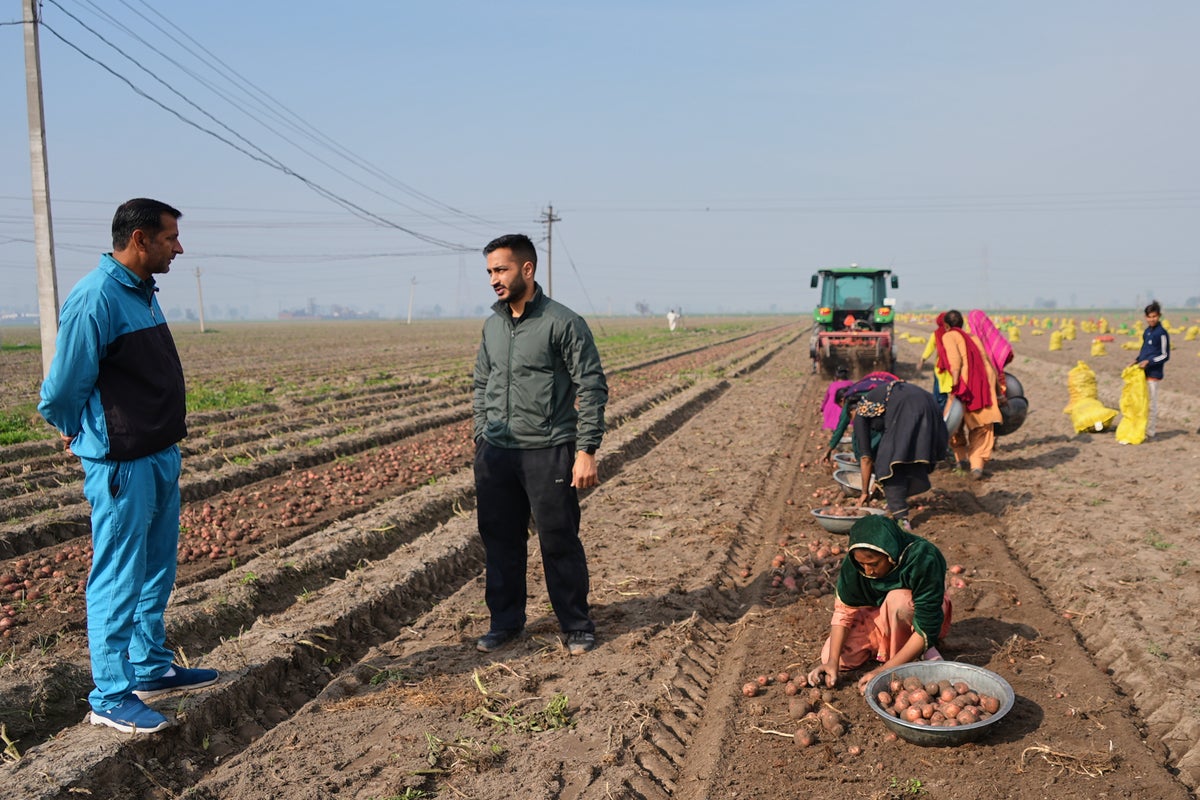
Farmer Bir Virk tapped the iPad mounted beside his tractor’s steering wheel and switched the vehicle to automatic mode. The machine moved forward and began harvesting potatoes on its own in the fields of Karnal, a city in northern India.

Some 145 kilometers (90 miles) away in the country’s capital of New Delhi, educator Swetank Pandey employed similar automation at his coaching academy. He used algorithms to scan and grade handwritten exam papers from candidates for India’s competitive civil services.

In both cases, the same invisible hand was at work: artificial intelligence.

From farms to classrooms, AI is fast emerging as a tool for many Indians to boost efficiency and cut time, costs and labor. Early adopters, like Virk and Pandey, say the technology is helping them boost productivity as they test AI’s potential to find solutions at work.

“I am able to farm very efficiently and I feel very happy that I do the work what my grandfather and father used to do. Now I am carrying the tradition forward with the right technology,” said Virk.

India is testing its AI scale

As AI use surges across the globe, the technology is steadily gaining ground across India as businesses, startups and individuals experiment with new ways to improve efficiency.

The Indian government is also rolling out national initiatives to fund research and train workers in AI. That push is on display this week as New Delhi hosts a five-day AI summit, which is being attended by heads of state and top tech CEOs.

With nearly a billion internet users, India has also become a key focus for global tech companies to scale their AI businesses in one of the world’s fastest-growing digital markets.

Last December, Microsoft announced a $17.5 billion investment over four years to expand cloud and AI infrastructure in India. It followed Google’s $15 billion investment over five years, including plans for its first AI hub in the country.

“There’s some good use cases that have started. There are these scaling platforms that are now embedding AI into them,” said Sangeeta Gupta, senior vice president at NASSCOM, a prominent body representing India’s technology industry.

India’s adoption to AI, however, has its constraints.

The country still lags in developing its own large-scale AI model like U.S.-based OpenAI or China’s DeepSeek, highlighting challenges such as limited access to advanced semiconductor chips, data centers and hundreds of local languages to learn from.

While tech companies have ramped up spending on AI training and reskilling, those unable to adapt are being pushed out. Tata Consultancy Services, the country’s largest private employer, cut more than 12,000 jobs last year, driven by a rapid shift toward AI.

At the same time, however, people like Virk and Pandey say AI tools are already making their work faster and more efficient.

Precision agriculture through AI

Virk, the farmer, first encountered AI-driven farming technology five years ago while studying and working in the United States. When he returned to India in 2021, he imported the system from a Swedish company and has been using it on his farm for the past couple of years.

His automated tractor can plant seeds, spray fertilizer and harvest crops. The system costs about $3,864 and combines a steering motor, satellite signals that help move the tractor precisely, and an AI-driven software that converts data into movement.

It also logs errors and uploads them to a cloud platform, where the software company analyzes the data and sends related updates back to the machine.

“Technology and intelligence play a big role in this. The tractor works in a straight line. It maintains an accuracy of 0.01 centimeter (0.004 inch),” Virk said.

He said his AI-enabled tractor has reduced his work time by half.

“Its most special feature is that it is self-learning,” he said.

AI enters India’s famed exam factories

Educator Pandey teaches at a civil services coaching center, a sector known for its fierce competition. Millions of young Indians compete for civil service jobs each year, and coaching centers process vast numbers of tests, evaluations and revisions.

Pandey said AI has made that workload easier to manage.

Using large language models such as ChatGPT, Gemini and Claude, along with other automation tools, Pandey and his team scan and evaluate answer sheets, create targeted study material and structure syllabuses for the aspirants.

Pandey said the technology helps him carry out repetitive tasks, allowing tens of thousands of answer sheets to be evaluated in as little as 20 to 25 minutes.

“If you have a better machine, bigger system, you can do it in two minutes,” he said.

For now, his coaching academy uses a hybrid model. AI helps with evaluations and teachers review the output, improving both speed and quality.

Pandey said AI often produces study material that students find more relatable than those devised by teachers.

“AI is able to give us in advance a basic idea what the student is doing right now and what next he or she should do to be able to achieve their goals,” he said.

——

Saaliq reported from New Delhi.

From news to politics, travel to sport, culture to climate – The Independent has a host of free newsletters to suit your interests. To find the stories you want to read, and more, in your inbox, click here.
I love electronic music – but AI artists are missing the one thing that makes songs matter

Stop me if you’ve heard this before: musicians are urging people not to embrace new technology because it’s not real music and it’ll put real musicians out of work. This time the year is 2026 and the technology is AI, but it’s a song we’ve heard before. I remember hearing it back in 1982, when members of the UK Musicians’ Union wanted to ban synthesizers and drum machines to protect working musicians’ jobs.

There’s a long tradition of musicians going “nooooooo!” about new technology in music. In the 1960s there were calls to ban the Mellotron, fearing it would replace session string players. In the 1970s and 1980s disco and dance music’s use of synths and drum machines was derided. In the late 1990s and early 2000s Autotune was the enemy. And now many people are arguing against the use of generative AI.

AI boosters argue that this is history repeating, a reactionary backlash to new musical tools. But generative AI is very different from the tech that came before it.

Talkin’ ’bout AI generation

Whether it’s a synth, a sampler, Autotune or Ableton Live, tech can do great things in music. And you can say the same about AI. Many artists use AI-based mastering tools to make their songs sound better, and tools like AI stem separation and chord detection are incredible. But they’re musical helpers, not music creators.

Fans of generative AI say that artists will use the tech as they did drum machines and digital audio workstations, using new tools to reach new creative heights. And I’m sure many artists will: platforms such as Mozart.ai, which bill themselves as musical co-producers rather than music generators, which create parts of songs rather than complete tracks and which promise that their system wasn’t trained on stolen sounds, look very promising. But what worries me is that the music those musicians make won’t be heard, and won’t make them any money.

And that’s because right now generative AI isn’t really being used to help musicians. It’s being used to drown them out.

Slop, slop, slop music

Streaming services are experiencing a plague of AI slop: waves of AI-generated songs designed to sound like popular artists and in some cases, actually pretending to be real artists. They’re not so much songs as spam, and they can be generated in massive quantities with virtually zero effort. Slop can be created and uploaded far faster than any system can detect it and take it down, leading to the AI grey goo scenario where the volume of AI-generated content overwhelms everything.

That’s a problem for artists because every space on a playlist or page taken up by AI slop is a space a human artist doesn’t get to fill. So the more AI there is the harder it becomes for humans to stand out, and the harder it becomes for them make any money from their music. If they’re not being played in big enough numbers, they’re not being paid.

Recording musicians make money from copyright: they (or their record company) own the rights to their music, and if you want to play it, broadcast it or stream it you need to pay the copyright owner for the right to do that. Spotify alone paid over $11 billion to rights owners in 2025.

Generative AI threatens artists’ income in two ways. First of all, it’s largely based on stealing music from artists: Suno, the leading generative AI music platform, admits that it was trained on “essentially all music files on internet” and like other AI firms it argues that grabbing all that music for training data shouldn’t require permission or payment.

Secondly, as the law currently stands in the US and elsewhere you can’t copyright fully AI-generated music because it isn’t made by any humans; writing prompts isn’t currently considered the same as writing a melody or a lyric.

If you take those two things together (and if the AI firms’ arguments aren’t thrown out of court) you have a real nightmare for musicians: generative AI can take your music without paying for it, make music based on it, and then charge people to use or listen to that music without giving you a cent. All the money that would normally have gone to the music business and to artists goes to the platform owner instead.

Generative AI is offering platforms a magic musical money tree. Let’s say you’re a streamer who brings in around $16 billion a year in revenues and spends $11 billion on paying copyright owners for the rights to stream their songs. How sweet does fully AI-generated music sound right now?

And it’s not just streamers. Music soundtracks all kinds of things from blockbuster movies to YouTube ads. It’s played in stores, in waiting rooms, in receptions and in offices and on factory floors. All of these things pay human musicians. But for how much longer?

The song remains the same

That has the potential to affect all of us, musicians and music fans alike. If your favorite streaming service gets stuffed with AI slop and packs its playlists with AI performances, that’s going to make it so much harder for you to find great music by human artists.

Does that matter? I think it does.

I’m no “keep music real” reactionary who thinks music should only be played on bits of wood by people with beards; I’ve just published a book celebrating music including Hi-NRG, Chicago house, electronic pop and hyperpop. As a musician, I think simulations such as Breaking Rust and Xania Monet, and the music Suno can make in seconds, are technologically very impressive. But as a music fan their music leaves me completely cold.

The tech may be new but what they’re doing is very old: whenever there’s a genuinely good artist there will be imitators trying to copy them. Very few copycats turn out to be anywhere near as good as the people they’re copying.

And that’s the case with the fully AI artists I’ve heard so far. It’s music that’s been made to sound like other people’s music, and that means it’s been made without the passion and soul and personality that makes good music so great and that makes music matter so much to so many of us.

I have another worry, which is that humans will start copying AI music — because if that’s what the platforms prioritise, if that’s what social media rewards, then plenty of musicians will try to jump on the bandwagon because the algorithms will bury anything else.

That’s a future I’d hate to hear, a future where music becomes muzak and pop becomes slop.

Follow Sohh.comon Google News and add us as a preferred source to get our expert news, reviews, and opinion in your feeds. Make sure to click the Follow button!

And of course you can also follow Sohh.comon TikTok for news, reviews, unboxings in video form, and get regular updates from us on WhatsApp too.

Like this article? For more stories like this, follow us on MSN by clicking the +Follow button at the top of this page.