I’m not convinced open earbuds work for gaming, despite Asus’ best efforts

Open earbuds are all the rage – in fact, if you asked me to identify some consumer tech trends from the last 18 months and put a ban on AI featuring in that list, I’d put open earbuds right near the top. Everyone and their nan has been trying to get in on a market that seems to be growing.

People want earbuds so they can continue their nonstop content consumption, but they don’t always want to be cocooned in the perfect noise-cancelling bubble that many in-ear models offer. Open options make it easier to stay aware of your surroundings, making them safer for outdoor runs and cycling, and less antisocial in offices.

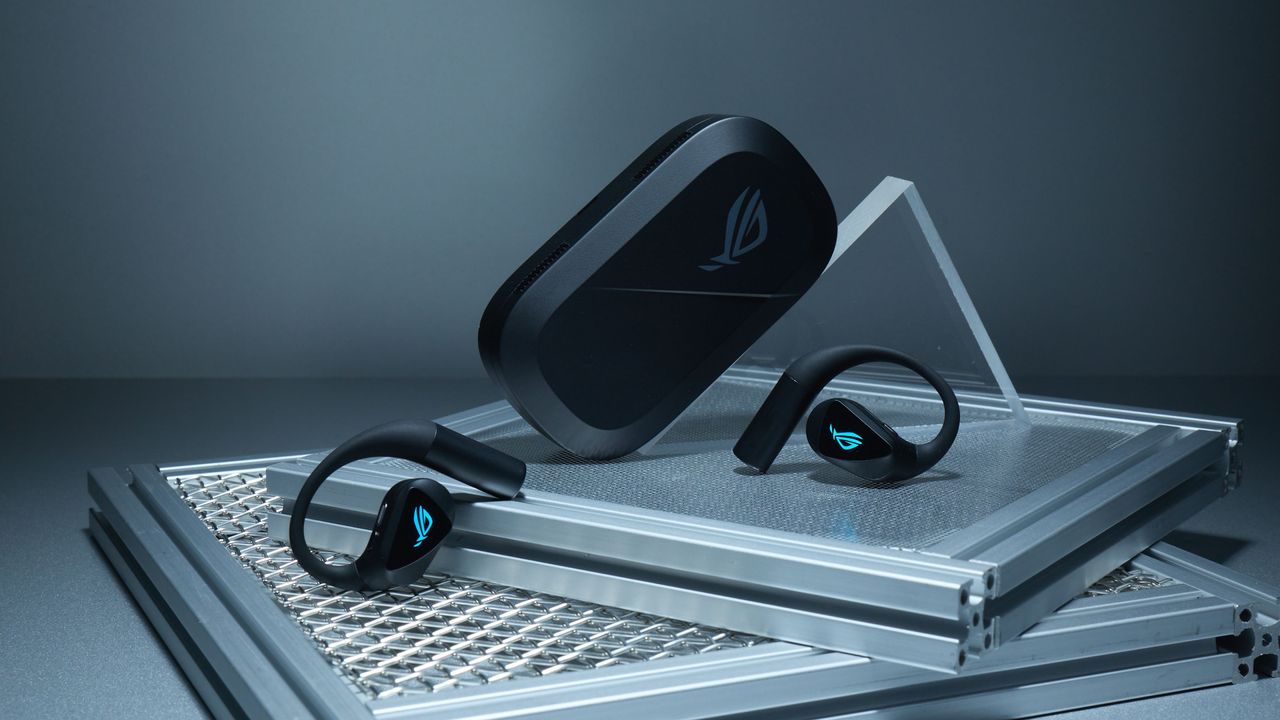
That pitch is a pretty familiar one by now, but I’ve never really heard it applied to gaming – a medium where the common wisdom would be that you’d always rather be enveloped in immersive sound and able to block out background noise. That hasn’t stopped Asus from making the ROG Cetra Open earbuds, though, and I’ve been using them for a fair few hours now.

I have to say, for all that they’re solidly-made earbuds, I’m yet to be won over by the idea at their core. Like a fair few open earbuds of their type, the ROG Cetra Open come in a far bigger charging case than in-ears do. This houses the two curled-up earbuds, along with a USB-C connector for your console, PC, or other device.

This marks them out from mainstream open earbuds, since it allows for 2.4GHz connectivity with extremely low latency, ideal for gaming, but Bluetooth is on hand too for more standard wireless use.

These aren’t small earbuds, thanks to chunky tubes that rest behind your ear while you wear them, but they are indeed nice and comfortable thanks to that out-of-ear design, which makes them nice to wear for long sessions.

However, that doesn’t mean I’m having a great time using them to game. First impressions matter hugely, I’d argue, and it wasn’t all that great to connect the Cetra Open earbuds to my PS5 Pro and be greeted by confusingly low audio that I couldn’t straightforwardly get up to the level I wanted. I’ve never had that issue with any other audio device on the console.

Using them with my PC and Switch 2, meanwhile, I haven’t had that problem, but I still haven’t really been sold on their core concept. It’s very rare that I game in a passive way, where distractions are welcome or ambient noise is happily absorbed.

Sure, I played plenty of games on mute as a kid, back in the Game Boy Advance days, but as an adult, I’m lucky enough to use the SteelSeries Arctis Nova Elite, and its noise-cancelling doesn’t bear comparison to the Cetra Open experience. Portability is a factor, sure, but the case here is huge, and I’d generally rather use my AirPods Pro 3 over Bluetooth with my Switch 2 on the go.

This leaves me feeling like the ROG Cetra Open are a slightly weird pair of ‘buds, mainly leaving me with one big question: who are these earbuds for? I know the answer isn’t me, now, but I’m curious to find out if there is indeed a market for gaming open earbuds in the first place.

Like this article? For more stories like this, follow us on MSN by clicking the +Follow button at the top of this page.

Shark just announced a new hair tool – and it promises smooth strands in minutes

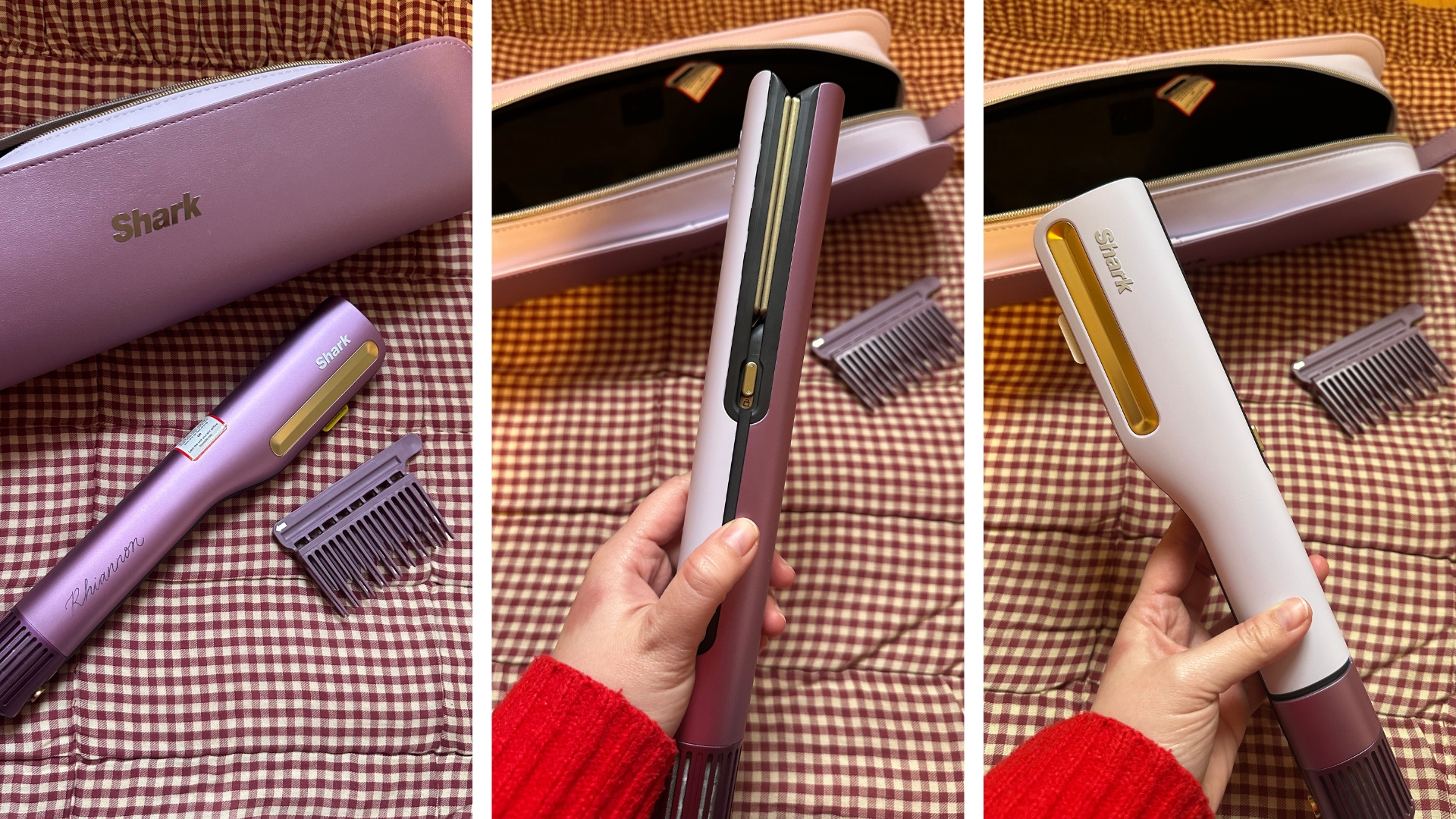
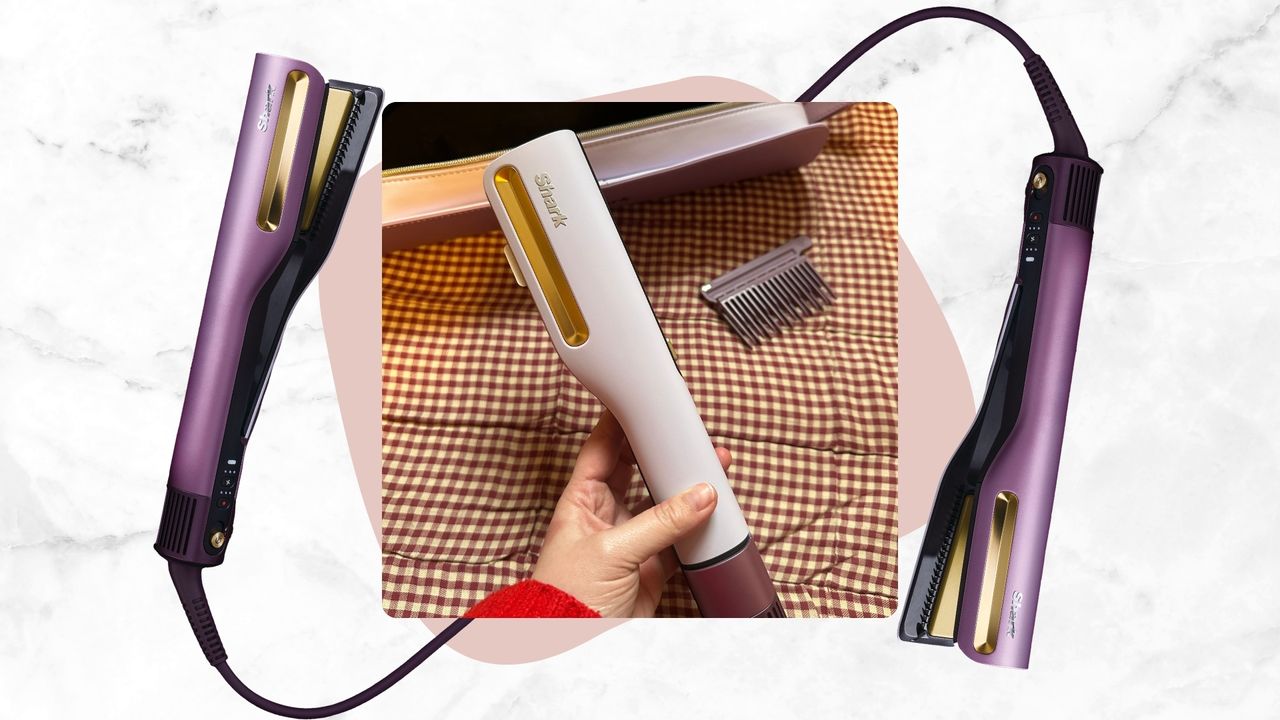
Introducing Shark’s SilkiPro Straight, the innovative tool that promises to transform wet hair into silky-straight lengths in minutes, no hair dryer or tool swapping required.

Combining the capabilities of a hair dryer and a ceramic straightener into one sleek, hard-working tool, Shark’s latest launch might just have you retiring even your best straighteners, multi-stylers and dryers for good. Not only does this new tool dry and smooth your strands simultaneously, but it also features adaptive heat flow technology for ‘no-heat-damage’ styling and comes equipped with three interchangeable comb attachments to deliver silky, professional-looking results, hence its name. All, we might add, for a fraction of the price of some of its competitors. Oh, and did we mention it’s suitable for all hair types?

So, if you love a sleek and glossy hair look, but want more from your straighteners, perhaps not needing to dry your hair completely first with one of the best hair dryers or else risk frazzled strands? Allow us to introduce you to the latest addition to Shark Beauty’s hair tool family…

Everything to know about Shark’s new Air Straightener

Joining the ranks of popular tools like the FlexStyle, Shark’s SilkiPro is the brand’s first free-standing air straightener. It’s set to be quite the problem-solver for those who want to reduce frizz and achieve smooth, glossy styles without the heat damage that often comes hand-in-hand with traditional straightening irons.

Launching on March 4th, 2026 and retailing at £249, this wet-to-dry air styler features built-in HeatSense Ceramic plates, RapidDry Technology and high-velocity airflow. It also comes with three comb attachments (for adaptive styling) and our beauty team was treated to a first look at both of its chic colourways, as well as all the intel on how it works.

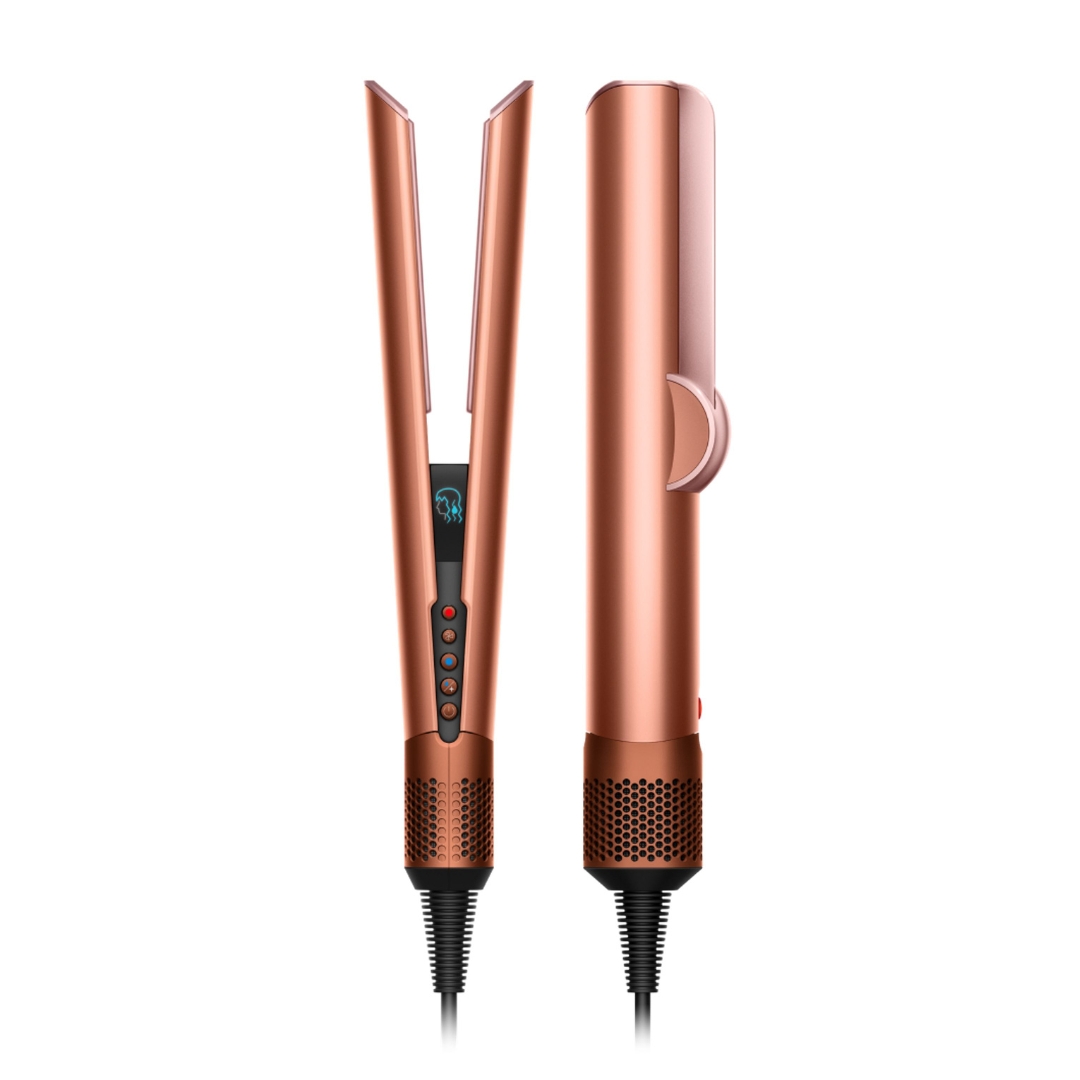
Much like with how there’s a debate between the Shark Hair Dryer vs Dyson Supersonic, this new air straightener indeed looks set to rival the Dyson Airstrait as it too eradicates the need for multiple tools to create shiny and smooth hairstyles.

The device offers three modes: Pre-Dry, which is ideal for 100% wet hair and should be used with the Wide-Tooth Comb to rough-dry roots and stretch thick, long, textured, curly or coily hair. Then there’s Wet Mode (best for 70% dry hair), which can be used with either Gentle or Precision combs, to smooth and add shine. The Dry Mode is suitable for completely dried hair, and again straightens and delivers ultra-glossy styles with either the Gentle or Precision comb attachments.

All in all, it looks set to be a very versatile and time-saving device, without breaking the bank as it costs under £250, which is a standard price for just one techy hair tool, but in this case, you’re getting two.

Best air-powered hair straighteners

We’ve still got a few weeks until the Shark tool hits the market, however there are plenty of other air-powered hair straighteners available to shop – from the likes of Dyson, ghd and Bellissima.

Like this article? For more stories like this, follow us on MSN by clicking the +Follow button at the top of this page.

What’s at stake in the landmark US trial against social media firms?

At the age of 6, she was already watching YouTube videos.

Then she had an Instagram account – years before she was actually allowed. Snapchat and TikTok followed.

Now at 20 years old, the young woman, known publicly by the initials KGM, is taking social media networks to court in the United States.

KGM’s accusation?

The platforms were deliberately designed to be addictive – for example, by offering the option of “endless scrolling,” where a single swipe of the finger takes you to the next post and the feed never ends. The result for her was depression, anxiety, and dissatisfaction with her own body. She claims the companies design the apps as “traps” for young users.

KGM’s excessive and problematic use of social media changed the course of her childhood, her lawyer Joseph VanZandt emphasizes in a hearing. During questioning, she herself points out, among other things, that so-called filters on Instagram, which alter the appearance of people in pictures, led her to become dissatisfied with her own body.

When someone once posted an unedited picture of her face, she became extremely upset. The algorithms also gave her advice such as eating only one cucumber a day to lose weight.

Snapchat and TikTok wanted to settle

KGM sued Instagram, YouTube, Snapchat and TikTok. A few weeks before the trial began in Los Angeles, the companies behind Snapchat and TikTok reached a settlement with the plaintiff.

But Instagram and YouTube want to fight the allegations in court. Since Instagram is part of the Facebook group Meta, chief executive Mark Zuckerberg is also scheduled to testify on Wednesday.

There is a lot at stake for the online giants. Hundreds of similar lawsuits are in the legal pipeline in the US. The trial in Los Angeles is the first test case to see whether such allegations can be successful in US courts, where comparisons are being made to earlier lawsuits against the tobacco industry.

In those cases, tobacco companies were accused of deliberately concealing from their customers that cigarettes are addictive. In the end, the companies paid billions in healthcare costs and restricted advertising.

Judge: No exemption from liability for functions

Social media platforms are largely protected from lawsuits in the US due to a regulation known as Section 230. Essentially, it states that platforms cannot be prosecuted for content published by their users. This exemption from liability made the rise of services such as YouTube and Facebook possible in the first place.

In the Los Angeles case, the companies initially tried to prevent the case from going to trial at all by referring to Section 230 and asked that the lawsuit be dismissed.

Their argument was that even if KGM had suffered damage, it was videos and posts by other users that had caused it. However, Judge Carolyn Kuhl saw this differently. She said this Section 230 does not mean that there can be no liability for the damage caused by the design of the feature.

And in this case, there was evidence that Instagram features had led KGM to compulsive video consumption.

High hurdle for plaintiff

Still, KGM is facing a fairly high hurdle at trial. She and her lawyers must convince the jury that the features of Instagram and YouTube were a significant factor in her mental health problems.

Meta and its lawyers plan to show that KGM faced many extensive mental health challenges long before she used social media.

At the start of the trial, Meta’s lawyers argued that the plaintiff’s mental health issues were due to abuse and a dysfunctional family environment. They also point out that KGM has not been diagnosed with social media addiction.

Platforms deny addictive potential

Instagram chief executive Adam Mosseri, who has already been called to testify before Zuckerberg, denied that social media platforms are addictive. Users may become addicted to them in the same way they might become addicted to a TV series, but they are not “clinically addicted,” he told the New York Times.

Meta also points to measures introduced over the years to protect young users, such as special accounts for teenagers and parental control features.

Meanwhile, a lawyer for Google’s video platform YouTube said that it does not belong to the social media category at all, but is rather a streaming service like Disney+ or Netflix.

Brussels sees addictive mechanisms in TikTok

In Europe, TikTok is currently under scrutiny for similar allegations. According to preliminary results of an EU investigation, the video app violates European law.

The EU’s focus is on what it says are TikTok’s addictive mechanisms, for example, highly personalized recommendations and the uninterrupted automatic playback of videos. In its preliminary investigation, the EU Commission found that TikTok’s design constantly “rewards” users with new content, thereby encouraging them to keep scrolling. Meanwhile, in Australia, a strict social media ban for everyone under the age of 16 has been in place since mid-December.

The console vs PC split is dumb, and I hope Xbox is about to prove it

I cannot wait for gaming consoles to die, sorry, Xbox Series X and PlayStation 5.

To be clear, I don’t mean the idea of console gaming, but the hardware distinction. The artificial wall we keep pretending still matters. The thing that forces developers to build the same game twice for no good reason. That is what I am ready to bury.

Bonus? Maybe we can also bury console fanboys, which must be the corniest tribalism I’ve ever seen. I may goof on Linux users, but at least they build all those distros and work together for a common good. I’m in awe of their technical knowledge. Same with PC gamers who build their own systems and indulge in the most minor of details.

But someone who simply bought a console and is now a rabid fan of it? Come on.

But back to consoles, I love the couch experience. I love turning on a box and playing a game without tweaking settings or updating drivers. Instant on, instant play. What I do not love is the outdated belief that consoles and PCs must be two separate worlds.

That belief is not only wrong, it is actively harmful.

The divide is pointless now
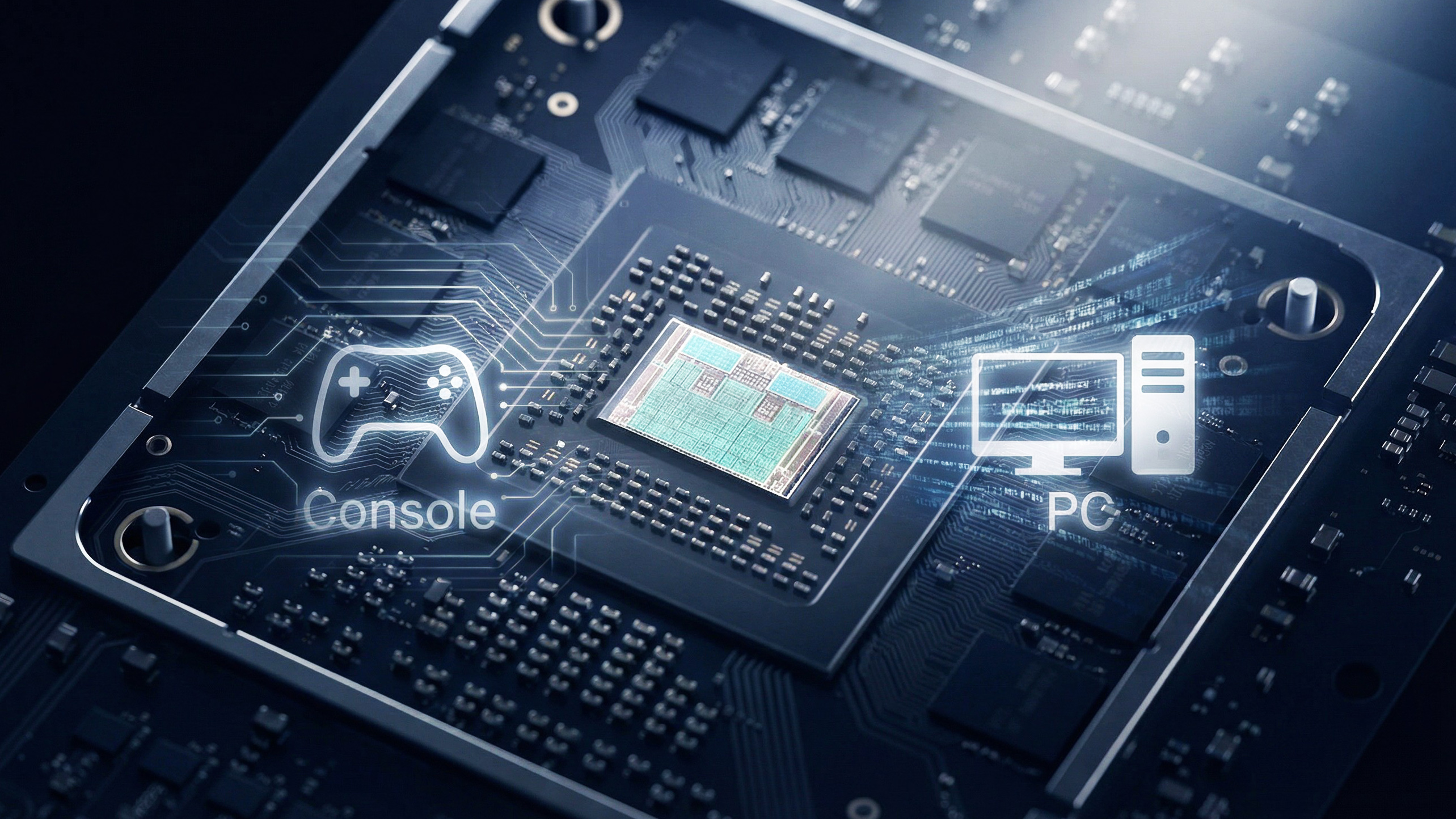
To wit, developers already build on PCs. Their tools run on PCs. Their engines run on PCs. Their testing environments are PCs. Then we make them carve out a separate console version that behaves differently, breaks differently, and needs its own patch pipeline. It is like asking a studio to shoot the same movie twice because one theater chain insists on a different aspect ratio.

This is especially brutal for indie teams. They just want people to play their game (confession: 99% of my game playing is indie titles; I don’t care about your Fortnite or CoD). Instead, these indie devs spend months wrestling with certification quirks, platform-specific bugs, and performance issues that exist only because we cling to a distinction that should have died years ago.

I am not cheering for the death of Xbox or PlayStation. I am cheering for the death of the pointless technical divide.

Gamers feel it too. Every time a studio tweets that the console version is delayed, you are seeing the cost of this artificial split. I can’t think of the number of articles we’ve written on Windows Central about some controversy over a console port, e.g., literally yesterday, with the news that mega-indie hit Mewgenics is coming eventually to consoles, while PC fans are having a blast with it today.

So yeah, I do not want consoles gone, I want them to evolve. I want the experience to stay and the technical baggage to disappear. And based on reporting from my colleague Jez Corden, that is exactly where Microsoft is heading.

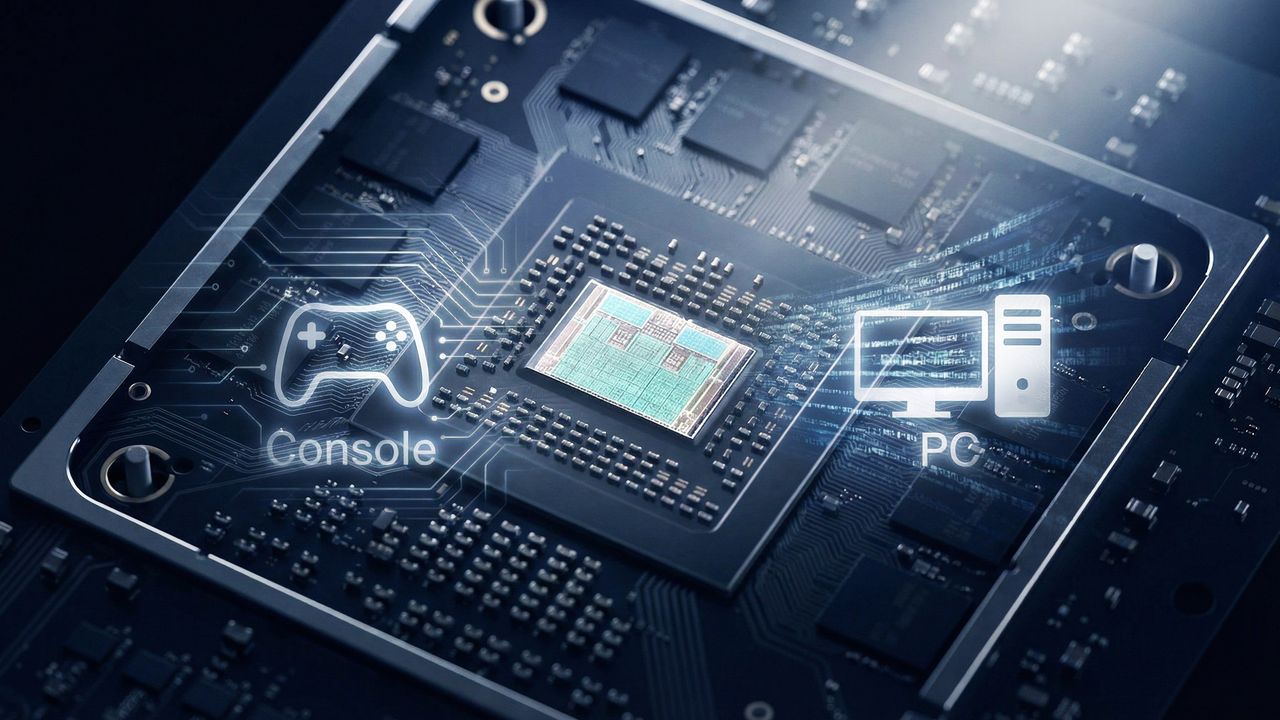
According to Jez’s reporting, the next Xbox coming in 2027 (assuming we can all afford RAM) is basically a Windows PC with an Xbox interface on top. It will run Windows. It will support multiple PC stores. It will behave like a curated gaming PC that just happens to sit under your TV.

This is not a wild rumor. It lines up with everything we have heard about Microsoft’s hardware roadmap and AMD’s next-generation semi-custom chips. It also makes perfect sense. If developers already build for Windows, why not ship a console that speaks the same language?

If this happens, the phrase console port becomes meaningless. Developers build once. They ship everywhere. No more parallel pipelines. No more wasted time.

In one swoop, the company behind PC gaming becomes the ultimate PC gaming company (for both hardware and studios).

Why this matters for everyone

A unified Windows-based Xbox means fewer bugs, faster patches, and more games launching on day one across PC and console. It also means Xbox Play Anywhere finally works the way it should. Buy a game once. Play it on your PC or your Xbox because they are the same platform with different shells.

This is not just good for developers. It is good for gamers who are tired of broken ports, staggered releases, and the weird feeling that your platform of choice is always the afterthought.

Moreover, this Xbox-as-a-PC means companies like HP, Lenovo, Dell, Razer, ASUS, and MSI can all try to make their own Xbox, competing on price and hardware. Right now, you get what Microsoft and Sony give you; that’s it. Imagine having an entry-level $400 Xbox and a baller $2,000 option from Razer with RGB and pure power and everything in between.

Yes, Windows has its own problems

Look, Windows can be messy. Updates break things. Drivers misbehave. The OS has a lot of history attached to it, and Windows 11 has done no favors to that reputation. But that is solvable. A locked-down Windows layer already exists in early form on handhelds like the Xbox Ally with the new Xbox App Full Screen Experience (FSE). It is rough, but it proves the idea works. With a fixed hardware profile, Microsoft can smooth out the experience.

I’ve been using FSE on my Lenovo Legion Go 2 and like the experience so much that I cancelled my plan to install SteamOS on it. I think FSE still has a way to go before it’s as smooth and enjoyable as Steam’s app in Big Picture Mode, but what Valve has done with SteamOS is no different than what Microsoft is attempting with the Xbox App FSE: Run a stripped-down OS in the background, launch a full-screen app on top. Done.

If they get the UX right, you get the best of both worlds. Console simplicity with PC flexibility.

Time to kill the distinction

Again, I am not cheering for the death of Xbox or PlayStation. I am cheering for the death of the pointless technical divide that forces developers to waste time and money.

The console experience should live on. The console platform should not.

If the next Xbox really is a Windows PC at heart, then we are finally heading toward a world where developers build once, ship everywhere, and stop fighting battles that should not exist in 2026.

And honestly, I cannot wait.

Over to you

Is it finally time to stop pretending consoles and PCs are two different worlds, or is the divide still worth preserving?

Drop your thoughts below. I’m especially curious to hear from developers and anyone who has wrestled with ports, patches, or platform quirks.

Join us on Reddit at r/Sohh.comto share your insights and discuss our latest news, reviews, and more.

Like this article? For more stories like this, follow us on MSN by clicking the +Follow button at the top of this page.
Valve is finally bringing technical context to Steam reviews

A new Steam feature will help you ensure your favorite games run smoothly on your system before making a purchase. Valve is adding the option to attach hardware specs when writing or updating a user review on Steam.

That addition should make it clear to those shopping for games if a title ran well on a system with similar specs. The feature is optional, so it won’t reveal all specs used to power a specific game, but it should give people a general idea of performance on different setups.

Of course, reviews can already include a PC’s specs that were entered manually, but the new Steam feature reserves an area for that information.

That option is in beta testing by Valve and started shipping to testers on February 12, 2026. Below is the full change log:

  • General
    • Added the option to attach hardware specs when writing or updating a Steam User Review on a game’s store page
    • Added the option to provide anonymized framerate data. When enabled Steam will collect gameplay framerate data, stored without connection to your Steam account but identified with the kind of hardware you are playing on. This data will help us learn about game compatibility and improve Steam. This feature is currently in Beta with a focus on devices running SteamOS.
  • Steam Families
    • Improved setting layout and navigation on desktop, deck and mobile devices.
  • Streaming
    • Fixed a case where streaming could leave downloads throttled even after the stream stopped.
  • Linux
    • Fixed a bug that could result in Proton games showing up as “Not valid on current platform” for users with very large libraries when using offline mode.
  • Steam Deck
    • When submitting feedback on whether you agree with a Deck Verified rating, if you disagree we’ll now ask for the reason. Providing a reason is optional.

The option to add anonymized frame rate data is also quite useful. If you enable that feature, Steam will collect data about the frame rates hit by your system when playing games, but the data is not attached to your Steam account. Instead, Valve will use that information to learn about compatibility and to improve Steam.

Considering the cost of RAM and upgrading a PC in 2026, it’s more important than ever to be able to see if your current PC can handle a game without any hardware upgrades.

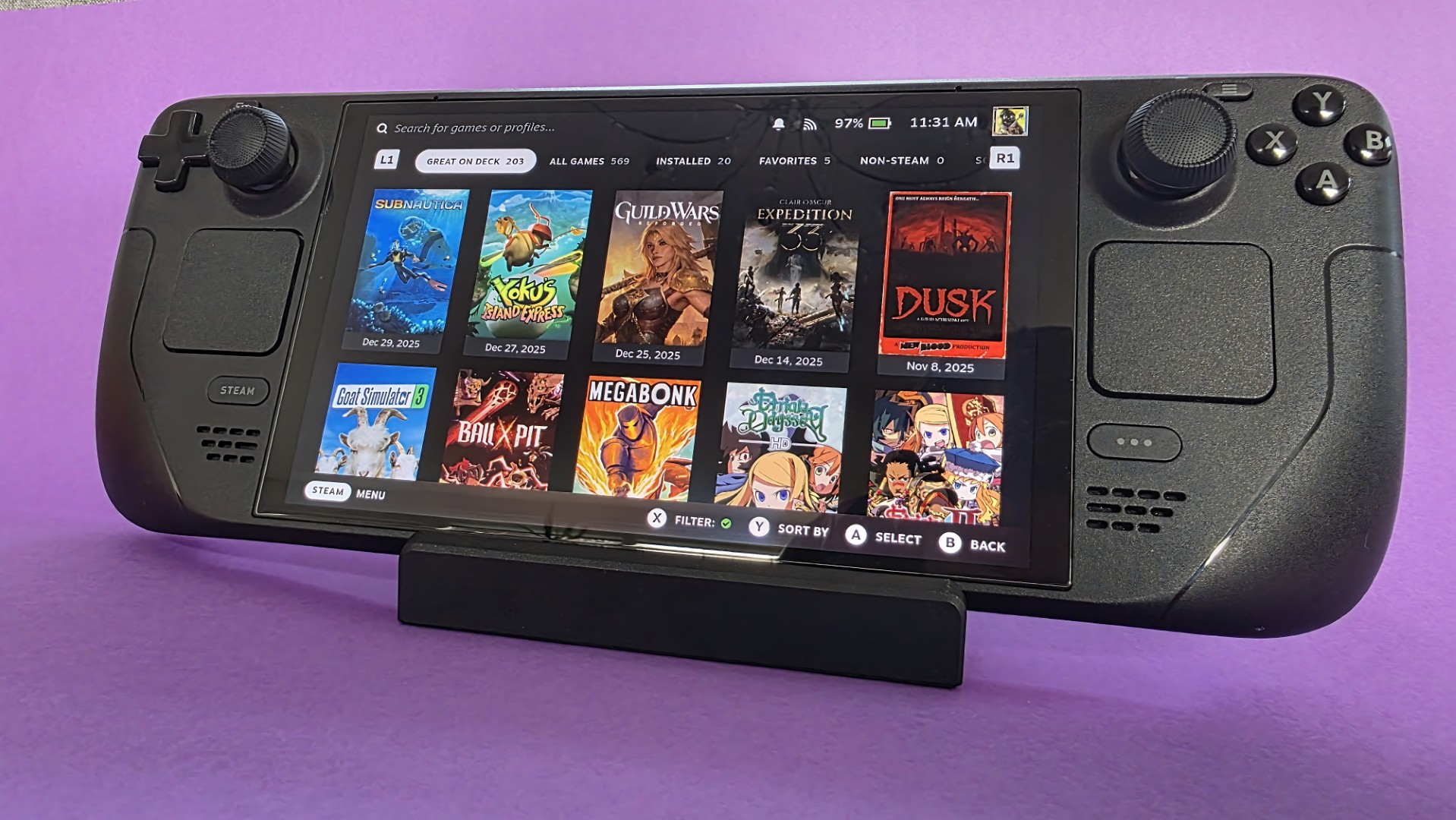
The final point in the change log is quite interesting. Valve will give users the option to indicate if they agree or disagree with a Deck Verified rating. The Steam Deck is a lovely gaming handheld, but it is far from the most powerful device.

Steam Deck owners want a clear way to know if a game works on the handheld, which should be “Deck Verified” status. That status should mean more in the future since people will have the chance to refute a claim that a game works well on Steam Deck.

Valve seeking feedback and collecting data is potentially paving the path to ensure that “Verified” is a meaningful for those who pick up a Steam Machine once that device launches.

Join us on Reddit at r/Sohh.comto share your insights and discuss our latest news, reviews, and more.

Like this article? For more stories like this, follow us on MSN by clicking the +Follow button at the top of this page.