Experience has taught me that the hard work lies in developing ‘soft skills’ in leadership and empathy, writes Wendy Edie
When I first started working in learning technology nearly three decades ago, we were just starting to deliver online courses over dial-up connections. Progress bars crept slowly across screens, and simply getting someone logged in felt like an achievement. Today, we’re talking about AI copilots, personalised learning journeys, and evidencing real-time skills development embedded into everyday work.
Technology has changed beyond recognition, but one thing has remained constant for me: successful workforce transformation has never been about the technology alone. In fact, I would say that is the easiest bit. The hard work lies in developing what can be considered ‘soft skills’ in leadership and, crucially, empathy.
That belief is shaped not only by my career but by my life as a mother. My two grown-up children have taken very different paths through education. One is thriving academically at university. The other, who told me after their first day at high school that “this isn’t for me”, has built a career through an apprenticeship in mechanics. Watching them learn in completely different ways has reinforced in me that there is no single route to capability, and technology must never assume there is.
Yet many organisations still fall into the same trap. One of the biggest misconceptions I see among business leaders is the idea that technology itself is the disruption. In reality, the real challenge is organisational mindset. Technology evolves rapidly, we’ve gone from dial-up learning platforms to AI copilots in the space of a generation, but leadership behaviour often changes far more slowly. Companies invest in new tools, while human behaviour means we continue to manage people and skills in outdated ways. As a result, transformation can stall before it begins.
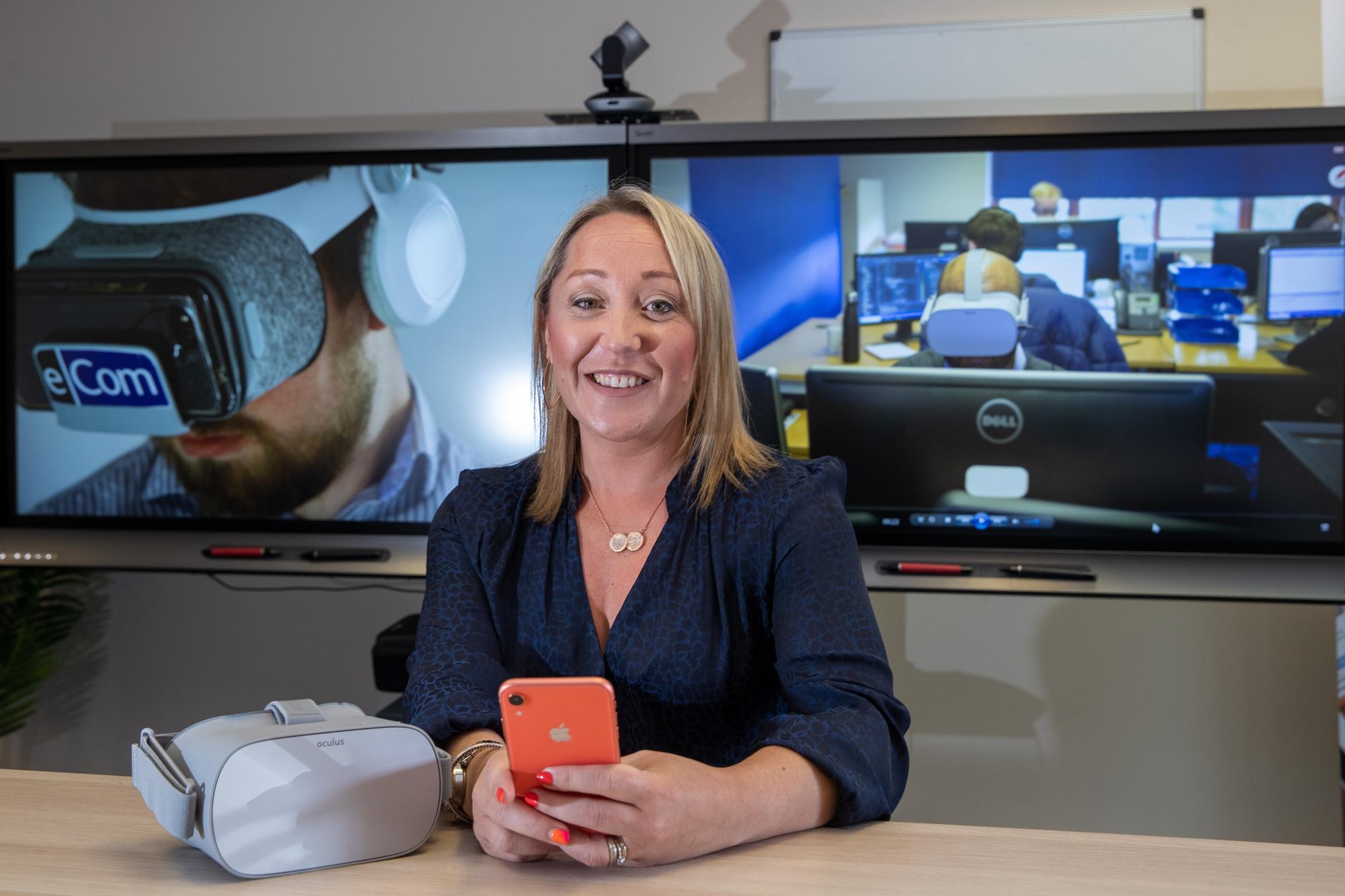
Scotland’s learning technology sector reflects this rapid evolution. What started as a niche technical discipline has become a globally respected ecosystem, fuelled by some great collaboration between educators, businesses, and technologists.
During eCom’s 30 years within innovation in learning technology, I’ve worked on amazing, impactful projects over the years, and now, working on global social change online learning and assessment solutions that are utilising technology the right way. But as artificial intelligence accelerates innovation even further, we need to work hard to keep the focus on the human experience rather than the pace of change.
This is why empathy has become central to how I lead and how I think about workforce development. Empathy-led technology doesn’t mean simpler technology; it means more thoughtful technology. To me, that means building programmes and platforms that adapt to people, whether they’re studying in a university lecture hall or learning new skills between jobs on a workshop floor. Technology should support learning wherever it happens: out in the field or at a desk, online or offline. In fact, one of the great ironies of modern innovation is that, as technology becomes more advanced, reliable offline access has become one of the most important requirements for real-world learning.
As we celebrate 30 years in this industry, I would say that one message is clear. Workforce transformation is not a one-off initiative or even a new platform rollout. It requires a culture where learning is continuous, accessible, and aligned with real work. The organisations that will succeed in the next decade will be those that remove barriers rather than add complexity, and treat empathy as a strategic advantage, not a soft skill.
The journey from those early dial-up courses to today’s AI-powered tools, the pace of innovation is extraordinary. But our real responsibility as leaders is to ensure that, as technology evolves, learning becomes more inclusive, more accessible, and more human – not less.
Wendy Edie, CEO, eCom Learning Solutions

Leave a Reply